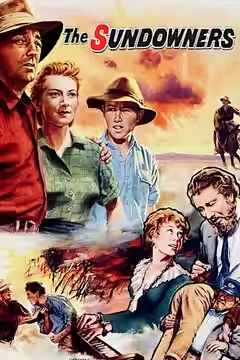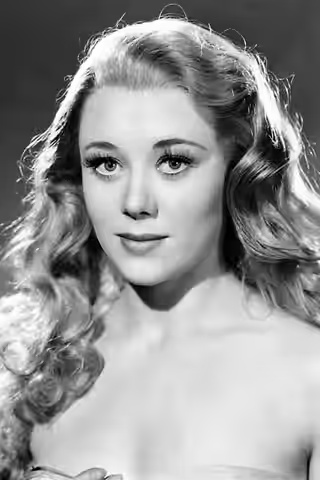
A husky, breathy voice that composers wrote songs for, and a long run of practical, spirited women in British and Hollywood films. Johns was often typecast as cute, and she was sharper than the parts that asked it of her.
Fi1m perspective
Start with the voice. It was husky and breathy, and it did not quite match the face it came out of, which is why composers wrote songs for it rather than handing her ones that already existed. She sang "Sister Suffragette" as Mrs Banks in Mary Poppins (1964), and on Broadway she was the first to sing "Send in the Clowns", as Desiree Armfeldt in A Little Night Music (1973). In both the sound is the same: a woman making up her mind out loud, and slightly surprised by what she decides.
The career runs long. She trained in ballet as a child, was on stage at twelve, and made her screen debut in South Riding (1938). She was a fixture of British cinema through the war, in 49th Parallel (1941), and became a star with Miranda (1948), top-billed as a mermaid and asked to be delightful for ninety minutes. She was, and she was asked again in Mad About Men (1954). Ken Annakin directed her four times; her father, Mervyn Johns, acted alongside her twice. From the early 1950s she worked more in America, in The Court Jester (1955) with Danny Kaye and then The Sundowners (1960), and she kept working in film, television and theatre into the 1990s.
The Sundowners is the one we have reviewed, and it shows what she could do when a script stopped treating her as a garnish. Fred Zinnemann's film spends 133 minutes on one argument, keep moving or settle down, and Johns arrives once the cattle drive is over as Mrs Firth, a hotel-keeper who has run a bar for years and talks like it. She takes one look at Peter Ustinov's drifting ex-sailor and sets about him. We laughed harder than the outback and Robert Mitchum had prepared us to, and every time it was Johns treating a man built around leaving as a customer who had simply not yet been told the price. Those scenes are the funniest in the film and the most honest, because she is the only person in it who has already chosen.
The weakness was never hers so much as the industry's. The mermaid parts and their descendants asked her to be cute, and she was so good at it that she was kept at it, when the evidence of The Sundowners is that she was sharper as a woman with a business to run than as a woman with a tail. The later stage work, and a Welsh turn as Myfanwy Price opposite Richard Burton in Under Milk Wood (1971), suggest a career that found its second gear late and on other people's terms.
She once passed on her father's advice: "He said ‘Always listen for your cue.’ That is good advice both on stage and in life. Listen for your cue and then act on it." It describes her exactly. Watch her in a scene she does not lead, and you will see her waiting for the line that lets her take it.
Biography
Glynis Johns was a British actress born on 5 October 1923 in Pretoria, South Africa. She made her screen debut in South Riding (1938) and appeared as Anna in the wartime drama 49th Parallel (1941).
Johns originated the role of Desiree Armfeldt in the Broadway production of A Little Night Music (1973), winning the Tony Award for Best Actress in a Musical; Stephen Sondheim wrote 'Send in the Clowns' for her voice. She played Winifred Banks in the Disney film Mary Poppins (1964) and received an Academy Award nomination for Best Supporting Actress for The Sundowners (1960). Her father was the actor Mervyn Johns.
She appeared in more than 60 films across a career spanning seven decades, with later roles including those in While You Were Sleeping (1995) and The Ref (1994). Johns died on 4 January 2024.