Graeme Manson puts people in boxes, a maze of lethal rooms, a body that turns out to be one of many, and watches what pressure does to them. The premises are his best work; the plots grow faster than he can prune them.
Fi1m perspective
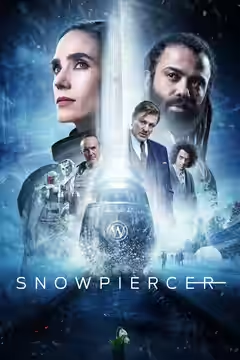
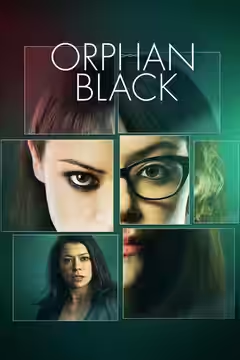
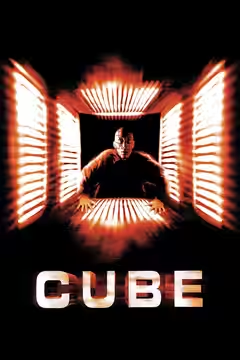
Graeme Manson's people are always somewhere they cannot leave. In Cube (1998) a group of strangers wakes inside a maze of lethal rooms and has to work out the rules before the rooms work them out. In Orphan Black (2013) Sarah Manning, a thief with a bad boyfriend, steps into a dead detective's shoes and inherits the detective's question: why are there several of us? In Snowpiercer (2020) the box is a train. "I don't shy away from claustrophobic stuff, even on television or film, because I find it so visceral and great for tension," he has said, and the work bears him out. The smaller the space he gives them, the better he writes.
The career runs from one small box to a very long one. Cube, written with André Bijelic and its director Vincenzo Natali, made his name as a writer of taut, idea-driven genre pieces. Then came a stretch of Canadian television, episodes of Flashpoint, The Bridge and Being Erica, and Lucky Girl (2001), a dark television film written with John Fawcett. Fawcett is the collaborator who matters. Together they created Orphan Black, which ran for five seasons of ten episodes each from 2013 to 2017, and it remains the fullest thing Manson has done. After it he moved to Snowpiercer (2020 to 2024) as co-showrunner, turning Bong Joon-ho's film into several seasons of class struggle aboard a train that never stops.
What he does well is the premise and the pressure it puts on people. Selfishness in a locked maze, a woman discovering she is one of many, a train divided by class: these are good questions, and he asks them straight, with a dark humour that keeps the philosophy from going solemn. What he does less well is stop. In Cube the screenplay starts making its people illustrate ideas, and we could feel the film arranging another dispute rather than finding out anything new about the group. In Orphan Black the conspiracy grows a new head every year. We were gripped by the first season, properly gripped, the kind where you resent the end credits; somewhere in the fourth we stopped keeping notes and simply watched Tatiana Maslany, whose several performances hold the whole thing up.
That is the pattern, and it is not a fatal one. Manson's premises are strong enough to survive their own plots. The one reservation anyone raises about him is that his later work adapts other people's ideas rather than building his own, and on the evidence of Cube and Orphan Black his own are the better kind. Give him an empty cell and a group of strangers and he is at his best. Give him a fourth season and he will fill it.
Biography
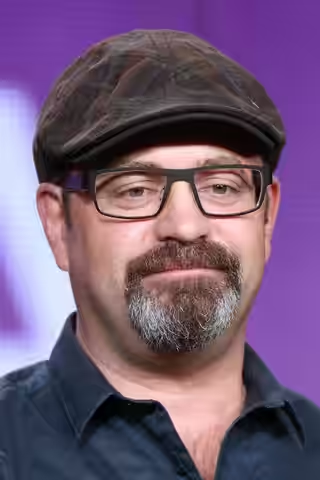
Graeme Manson is a Canadian screenwriter and producer from Vancouver, British Columbia. He co-wrote the screenplay for the 1997 film Cube.
With John Fawcett, Manson co-created the science fiction series Orphan Black (2013–2017), serving as executive producer and writer. The pair had previously collaborated on the 2001 film Lucky Girl. He later acted as co-showrunner on the series Snowpiercer (2020–2024).
Manson has received three Canadian Screen Awards, a Hugo Award and a Writers Guild of Canada award.