Guy Kibbee spent the 1930s as the fool in the good suit, the round-faced businessman or official not quite as bright as his money, and played it well enough that Warner and Capra kept asking. Small parts, done cleanly, in films that lasted.
Fi1m perspective
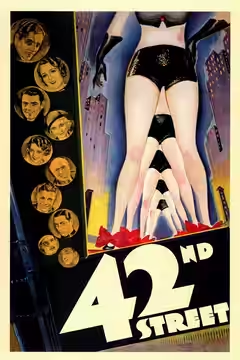
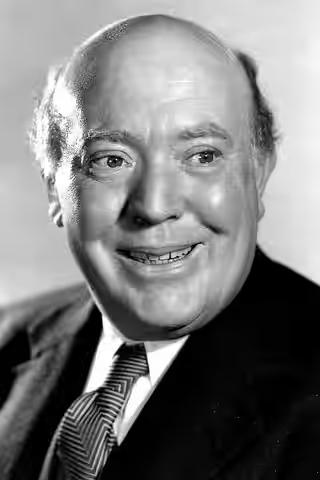
The face gets there first. Round, bald and wide-eyed, it registers alarm a beat before the man behind it has worked out what he is alarmed about, and in a Warner musical of the early 1930s that beat was usually the joke. Kibbee's Abner Dillon in 42nd Street (1933) is the investor who is paying for the show and expects the chorus girl to come with it; Faneul H. Peabody in Gold Diggers of 1933 is the same man in a different hat. Neither is much more than one gag, and Kibbee plays the gag straight, blinking and flustered and faintly wounded whenever anyone says no.
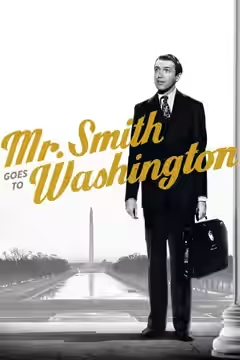
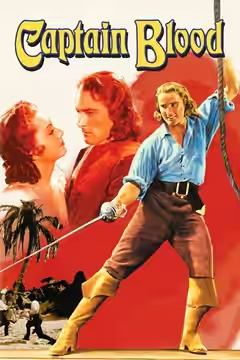
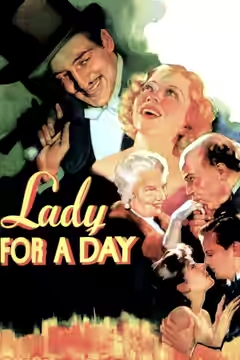
He came to films late. He was nearly fifty when Broadway noticed him, in Torch Song in 1930, after a quarter of a century in travelling stock companies, where he had started as a romantic lead until his hair went. Hollywood signed him at Paramount and then took him into the Warner Bros. stock company, and he spent the decade being useful: three musicals with Lloyd Bacon, the prestige productions, Captain Blood (1935) among them, and two films for Frank Capra. The turn came slowly. The judge in Lady for a Day (1933) was already a step away from the lecher, and by Governor Hopper in Mr. Smith Goes to Washington (1939), a man who is told what to do and does it, the wide eyes that had meant appetite meant worry instead.
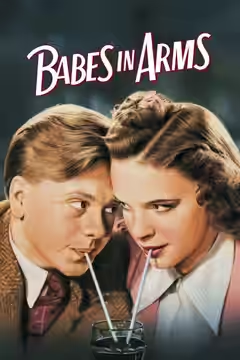
What works is the timing and the lack of vanity. Kibbee never asks to be liked; he lets the film laugh at him and does not wink to show he is in on it. In 42nd Street we laughed at Dillon and then felt slightly grubby about it, because the film is franker than Hollywood would be allowed to be for years afterwards about what a chorus girl owes the man with the money, and Kibbee's jollity, without a trace of menace, is what makes the arithmetic plain. What does not work is the sameness. Put the 1930s films in a row and the same fluster arrives on cue in each, and the studio gave him little reason to vary it. Leads were rare: the title part in Babbitt (1934), the Scattergood Baines series at RKO in the early 1940s. Rain (1932), in which he plays an expatriate innkeeper with unusual quiet, is the evidence that he could do less when asked. He was not often asked.
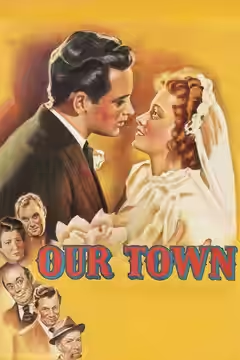
The last stretch put him among the folksy patriarchs and small-town elders: Mr. Webb in Our Town (1940), two John Ford Westerns in 1948, Fort Apache among them, and then retirement around 1950. He said of learning lines: "You can learn, between traffic light changes, all you’ll have to do the next day." It never showed.
Biography
Guy Kibbee was an American stage and film actor. He began his career entertaining on Mississippi riverboats before working in travelling stock companies and on Broadway, where he made his debut in the 1930 play Torch Song.
In the early 1930s he moved to Hollywood and became a contract player at Warner Bros., appearing in numerous supporting roles. He is credited as Governor Hopper in Mr. Smith Goes to Washington (1939) and also appeared in 42nd Street (1933), Gold Diggers of 1933 (1933), Captain Blood (1935) and Our Town (1940). His brother was the actor Milton Kibbee.
Kibbee died on 24 May 1956 in East Islip, New York.