Harry Carey underplayed for forty years, in silent Westerns for John Ford and then in talkies where everyone else was still shouting. He is rarely the reason a film exists, and often the reason it holds together.
Fi1m perspective
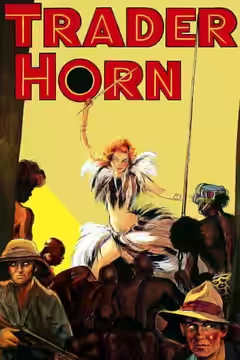
In Trader Horn (1931) the lions are real, the rivers are real, and the man pointing at the rhinoceros is standing on a stage in front of the wrong light. Harry Carey does not seem to mind. He plays Horn as someone who has been out there so long he has stopped noticing danger, and he says every line a shade quieter than the scene asks for. In 1931, when most actors were still shouting at the microphone, that was unusual. We were grateful for him: the film is stitched together from safari footage and studio inserts, and he is the one thing in it that behaves as though it all belongs in the same picture.
The quiet was learned in silence. Carey began with Biograph and D. W. Griffith in 1909, and from 1917 he was Cheyenne Harry, the hero of a run of Westerns directed by John Ford, starting with Straight Shooting (1917), Ford's first feature. They made twenty-six films together. The rugged frame and craggy features were built for the outdoors, and when sound arrived he did the sensible thing: he left features for a spell around 1928, trained the voice, and came back with a gritty baritone that matched the rest of him. Trader Horn was the relaunch.
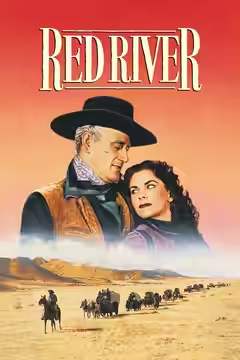
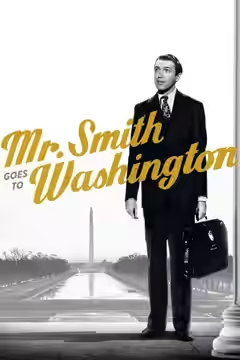
After it he was a character actor, mostly in low-budget Westerns that are seldom seen now, and in the occasional larger picture where a director needed a man to stand for decency without making a speech about it. In Mr. Smith Goes to Washington (1939) he is the President of the Senate, the man in the chair while James Stewart talks. It is not a part that gets noticed, and it is not meant to be; the job is to sit still and be believed, and he had the face for that. He worked for Howard Hawks three times, as the crew chief in Air Force (1943) among them, and his final part, Mr. Melville in Red River (1948), reached cinemas after his death in 1947, in a film that also had his son Harry Carey Jr. in it.
The case against him is thin and it is mostly a case against the industry: a leading man of the silents spent his last fifteen years in supporting parts and cheap Westerns, and the good films that used him used him briefly. He never had a Trader Horn again, and Trader Horn itself is hard going and uneasy company. The case for him is in that film all the same. Watch it for the lions, for Mutia Omoolu as Rencharo, and for Carey, who takes a picture that keeps pointing at things that are not there and makes you believe he can see them.
Biography
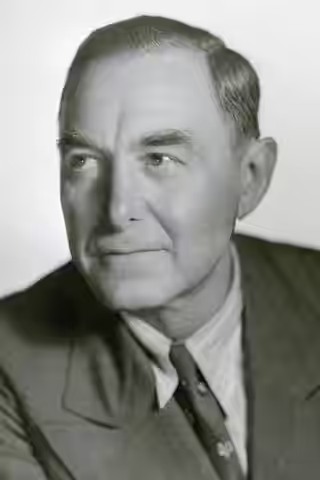
Harry Carey was an American actor born Henry DeWitt Carey II on 16 January 1878 in the Bronx, New York City. He began his career in the theatre before entering films in 1909, appearing in numerous silent Westerns for directors including D. W. Griffith. He later became a character actor in sound films.
Carey received an Academy Award nomination for Best Supporting Actor for his performance as the President of the Senate in Mr. Smith Goes to Washington (1939). Among his other notable roles were Mr. Melville in Red River (1948), Lem Smoot in Duel in the Sun (1946) and Marshal Wistful McClintock in Angel and the Badman (1947). He was the father of actor Harry Carey Jr. and was married to actress Olive Fuller Golden from 1920 until his death on 21 September 1947.