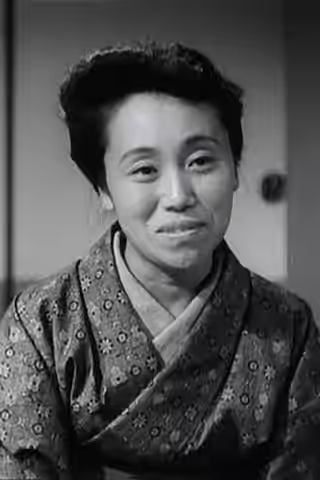
Haruko Sugimura can make a practical remark sound uncomfortably selfish. We rate her most highly in Ozu’s family dramas, where her pointed delivery makes difficult relatives hard to dismiss, even when their faults are written too plainly.
Fi1m perspective
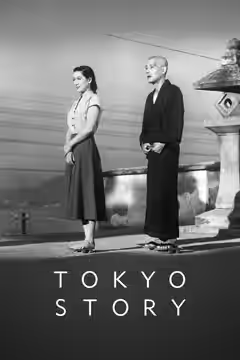
Sugimura gives ordinary family talk a pointed delivery, especially when her characters are being practical at someone else’s expense. In Tokyo Story (1953), her Shige Kaneko is a pragmatic, self-interested eldest daughter. Sugimura makes her vivid without making her easy to like. We found the film almost unbearable because the neglect is so ordinary; Shige’s selfishness belongs to a family we can recognise. The film gives us time to consider her without asking us to excuse her.
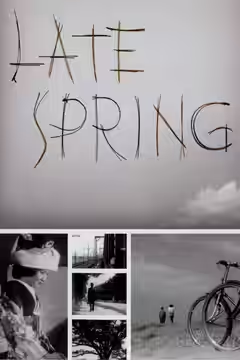
Late Spring (1949), her first major Ozu role, had already shown how useful that sharpness could be in a domestic drama. As Masa Taguchi, she lets changes of feeling come through restrained, pointed delivery. Setsuko Hara and Chishū Ryū remain the centre of the father-and-daughter story, but Sugimura helps make its family pressures feel ordinary and personally painful. The deliberate pace asks for patience, and her performance rewards attention to how something is said as much as to the words themselves.
That restraint was worked at. Sugimura brought a technique-driven, naturalistic approach from shingeki theatre, but stage training did not automatically suit Yasujirō Ozu’s films. On Early Summer (1951), he selected takes in which she reduced her emotional intensity, finding some of her acting too overt. A director prepared to ask her to do less was a useful collaborator.
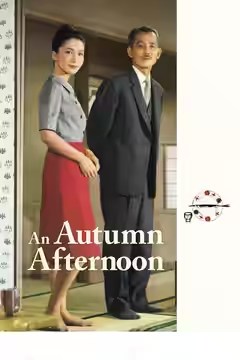
Her work with Mikio Naruse gave the calculating older woman more space. In Late Chrysanthemums (1954), she takes the lead as Kin, a former geisha navigating post-war life. It is a useful next step beyond the Ozu supporting parts, though we would not reduce either collaboration to one recurring type. An Autumn Afternoon (1962) brings her long association with Ozu towards its close; Red Beard (1965) places her in a Kurosawa film outside that familiar circle.
The limitation is that some of these women arrive with their selfishness too firmly established. Even in Tokyo Story, Shige can seem too plainly marked as materialistic, a part with less room for ambiguity than we might wish. Sugimura’s vividness keeps that reservation from becoming our whole response to the character. Start there, then make time for the deliberate pace of Late Spring.
Biography
Haruko Sugimura (杉村 春子) was a Japanese stage and film actress. She was born on 6 January 1909 in Hiroshima and died on 4 April 1997 in Tokyo. She joined the Tsukiji Little Theatre in 1927 and later became a founding member of the Bungakuza theatre company, remaining affiliated with it until her retirement in 1996.
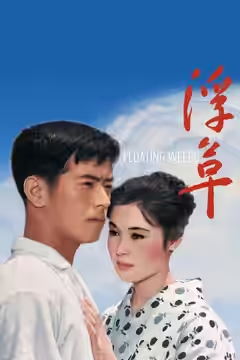
Sugimura made her film debut in 1932. She appeared in numerous films by Yasujirō Ozu, including Late Spring (1949) as Masa Taguchi, Early Summer (1951) as Tami Yabe, Tokyo Story (1953) as Shige Kaneko, Good Morning (1959) as Kikue Haraguchi, Floating Weeds (1959) as Oyoshi, The End of Summer (1961) as Katou Shige and An Autumn Afternoon (1962) as Tomoko Sakuma. She also worked with directors including Mikio Naruse, Akira Kurosawa and Kenji Mizoguchi.