Hollywood gave Hattie McDaniel one part, the maid who answers back, and she played it with more authority than the films deserved. In Gone with the Wind she alone never seems to be acting, and the film uses that to make slavery look kind.
Fi1m perspective
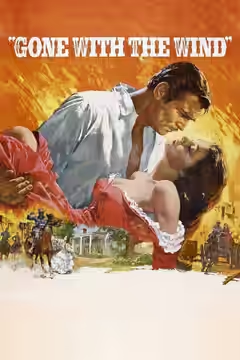
Hattie McDaniel walks into a room, tells the white people in it what she thinks of them, and they listen. That was the part the studios had for her, and she played it in film after film through the 1930s and 1940s: the maid or the mammy who speaks her mind, gives advice nobody asked for and is usually right. In Gone with the Wind (1939) she gives Mammy a force the script does not extend to anyone else in service, and she does it largely by standing still and refusing to be hurried. Everyone else in the house is in a flap. She is not.
She came to films late and from the stage. There were family minstrel shows and vaudeville as a teenager, then singing on the radio in Denver, then Los Angeles and a screen debut in 1932 in the small maid parts that were the only ones on offer to a Black woman. John Ford's Judge Priest (1934) got her noticed as Aunt Dilsey, and Alice Adams (1935) let her be funny. She auditioned for Mammy in a real maid's uniform and said afterwards that she had tried to make the woman live as she appeared to her in the book. After 1939 the parts did not change, only the billing: Song of the South (1946), three films alongside Clark Gable, and from 1947 the lead in Beulah on radio, one of the first times a Black performer had carried a mainstream programme.
What works is the authority, and it is also the problem. Our review of Gone with the Wind found Mammy given real force, and we stand by it: watching the film again, she was the one person at Tara we believed, and we were uneasy at how much the film needs us to. The writing treats her service as a reassuring part of the social order, and her conviction is exactly what makes that order look benign. A lesser actor would have let the film off the hook. She made it worse by being good.
She knew the argument. Some Black commentators of her day, the NAACP among them, said the parts kept the mammy stereotype alive and closed doors for the performers who came after, and she answered that she had never apologised for the roles and that, as she liked to put it, "I'd rather play a maid than be one." Both sides were right, which is what made it painful then and makes it painful now.
See Gone with the Wind for Vivien Leigh, as we said, but watch McDaniel too, and watch what the film does with her. Nobody in 1939 wrote her a part her size. She played the one she was given as though it were.
Biography
Hattie McDaniel was an American actress and singer. She began performing in minstrel shows and on radio in the 1910s and 1920s before making her film debut in The Golden West (1932). She appeared in dozens of films, frequently in supporting roles as maids or servants.
McDaniel's portrayal of Mammy in Gone with the Wind (1939) won her the Academy Award for Best Supporting Actress in 1940, the first Oscar awarded to an African American performer. She later starred as the title character in the radio series The Beulah Show (1947–51) and its television adaptation.