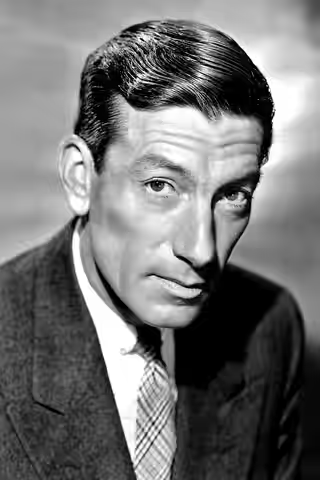
Hoagy Carmichael keeps acting when he starts playing the piano. His quiet, conversational manner makes musical interludes feel part of the story, and we value the warmth he brings to small roles, though his ease can soften an adventure’s urgency.
Fi1m perspective
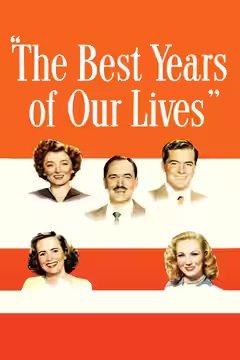
In The Best Years of Our Lives (1946), Hoagy Carmichael shares a piano with Homer in the foreground of a bar scene while another man occupies a distant phone booth. As Butch Engle, he holds his place in the scene without insisting that we watch him. We were moved by the quiet companionship at that piano: Carmichael gives Homer support without asking us to admire him for it. He is a fine supporting actor when a director trusts him to stay in the background.
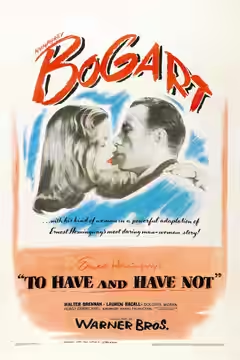
The parts grew out of the music. An uncredited piano-player appearance in Topper (1937) was followed by the more substantial Cricket in Howard Hawks’s To Have and Have Not (1945), where singing and playing belong to the character. Carmichael does not appear to step outside the film to give a recital. His relaxed manner suits Hawks’s willingness to leave Humphrey Bogart and Lauren Bacall time together. That ease helps make the film an easy recommendation, although it sometimes leaves the adventure short of pressure.
William Wyler makes better dramatic use of that unobtrusiveness in The Best Years of Our Lives. Toland’s deep-focus photography keeps the piano and the phone booth equally sharp, allowing our attention to move away from Carmichael without his disappearing from the scene. Daniel Mandell’s sparing cuts give the actors time, rather than continually directing us towards the next response. Hugo Friedhofer leaves the bar to Carmichael’s piano, which supplies warmth without an orchestral instruction to feel it. These choices let Carmichael contribute without making him the centre of attention.
The familiar musical supporting parts continued with Willie ‘Smoke’ Willoughby in Young Man with a Horn (1950). Jonesy in the television Western Laramie (1959–60) marked a turn towards a regular dramatic role, but the film work gives us a fairly narrow set of characters on which to judge him. We would not mistake that narrowness for a failure when Butch makes such good use of it. Start with The Best Years of Our Lives, and give the man at the piano some of your attention.
Biography
Hoagy Carmichael (born Howard Hoagland Carmichael) was an American composer, pianist, singer and actor. Born in Bloomington, Indiana, on 22 November 1899, he studied law at Indiana University before turning to music. He died in Rancho Mirage, California, on 27 December 1981.
Carmichael appeared as an actor in fourteen films, usually playing piano or singing his own compositions. His credited roles include Cricket in To Have and Have Not (1944), Butch Engle in The Best Years of Our Lives (1946), Hi Linnet in Canyon Passage (1946) and Willie 'Smoke' Willoughby in Young Man with a Horn (1950). He also voiced a character in the animated series The Flintstones (1960).
He composed numerous popular standards, including 'Stardust', 'Georgia on My Mind', 'The Nearness of You' and 'Heart and Soul', and won an Academy Award for Best Original Song for 'In the Cool, Cool, Cool of the Evening' (1951).