One bar scene in Billy Wilder's The Apartment (1960), and a scratchy Brooklyn voice that carries across it, made Hope Holiday one of the small parts people remember. The films that followed gave her the voice and not much else to do with it.
Fi1m perspective
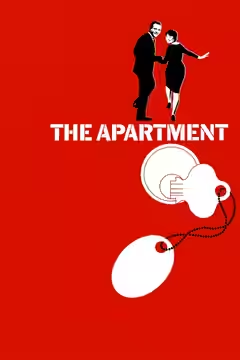
In The Apartment (1960), on Christmas Eve, Jack Lemmon's C.C. Baxter ends up in a bar next to a woman who will not stop talking to him. Hope Holiday plays her, Margie MacDougall, and the first thing you notice is the voice: scratchy, nasal, pure Brooklyn, a sound that reaches the back of any room, and one that has been compared to Judy Holliday's a decade earlier. Wilder rehearsed the scene with her down to the props. He told her not to look at the straw she was tearing open, to keep her eyes on Lemmon, and to blow the paper at him. It is a small piece of business and it does a great deal. She is a pest, she is funny, and she is quite plainly as alone as he is.
We have watched that scene many times and it still catches us out. She gets the laugh and then, without changing her voice or her face, lets us see the loneliness under it, so that Lemmon, who is meant to be the sad one, briefly becomes the audience. Our review of the film does not single her out, and that is fair about a film that belongs to Lemmon and Shirley MacLaine. But the bar is the scene she is known for, and it should be.
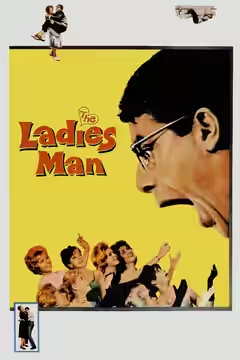
She had come to it sideways. As Hope Zee she was in the Broadway chorus from the late 1940s, in Gentlemen Prefer Blondes (1949), Guys and Dolls and Li'l Abner (1956), and she sang with bands and in nightclubs before the name change. Her first film was an uncredited dancer in Li'l Abner (1959). The Apartment brought a short Paramount contract, and the contract brought Jerry Lewis's The Ladies Man (1961), where she is billed as Miss Anxious, which is roughly what the script gave her to play; the women in that house are furniture, and she is one of the chairs. Wilder used her again as Lolita in Irma la Douce (1963), with Lemmon and MacLaine, and there was a western comedy, The Rounders (1965), with Glenn Ford and Henry Fonda, and television guest work in westerns and comedies.
Then a second career nobody would have guessed at from the first. From the 1980s she produced, as associate or executive producer, low-budget action and exploitation films, several with Cameron Mitchell: Killpoint, Low Blow, Space Mutiny, and Raw Force (1982), in which she also acts, as Hazel Buck. We have not reviewed them and will not pretend to a view. After that she retired.
Her own account of the years before Wilder was that she had spent seven years as "the most successful failure in show business". She said it in 1960, which turned out to be the last year it was true. What the later films show is a character actress with sharp timing and one instrument nobody else had, hired for brief turns and seldom stretched. If you want to know why the name sticks, do not start with the filmography. Start with the straw.
Biography
Hope Holiday is an American actress and producer. She is best known for playing Mrs. Margie MacDougall in Billy Wilder's The Apartment (1960). Her other notable film roles include Miss Anxious in The Ladies Man (1961) and Lolita in Irma la Douce (1963).
Born in Brooklyn, New York, and raised in Manhattan, she trained in ballet, tap and modern dance. She began her career in New York radio and on Broadway, later appearing in supporting parts on television and in films including Raw Force (1982). She also worked as a producer and was married to actor Frank Marth from 1967 until his death in 2014.