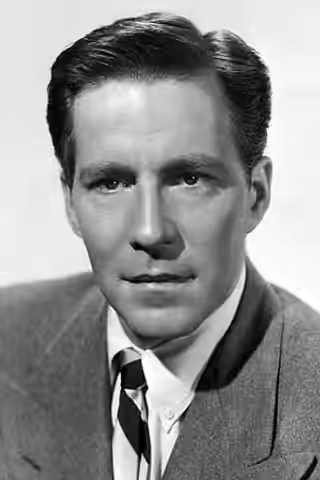
A 20th Century Fox contract player cast for gravity and never allowed to put it down. Hugh Marlowe stood beside the lead for two decades, grave and unsmiling, and the films that used him best did not ask him to explain it.
Fi1m perspective
Hugh Marlowe stands a little behind the star, hands still, jaw set, and says his lines as though someone in authority had approved them first. It is the same man in a bomber group, a Broadway drawing room and a flying-saucer picture: sombre, courteous, not given to smiling. Directors cast him for it, and there is a trade term for what they were buying. He was the humourless foil, the serious secondary man whose job is to be right about something nobody wants to hear.
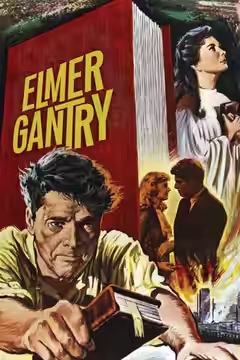
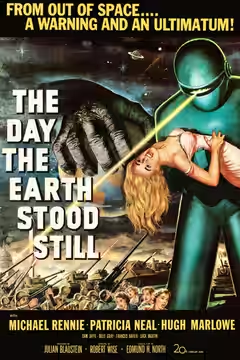
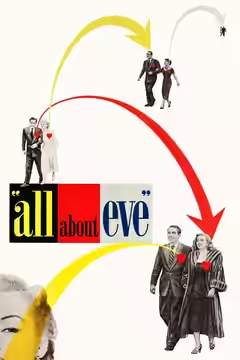
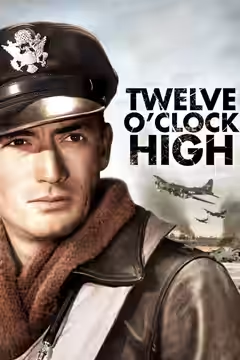
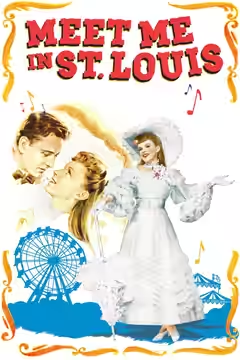
He came to it by way of radio, where he had been an announcer, and the stage at the Pasadena Playhouse in the 1930s; his first film role was in 1936 and he played the title part in early radio Adventures of Ellery Queen. There is an early appearance as Colonel Darly in Meet Me in St. Louis (1944), then the contract at Fox, where the useful years are: Lieutenant Colonel Ben Gately in Twelve O'Clock High (1949), the playwright Lloyd Richards in All About Eve (1950), Tom Stevens in The Day the Earth Stood Still (1951), and Howard Hawks's Monkey Business (1952). Elmer Gantry (1960) came later, as the Reverend Philip Garrison, and after that television, including a regular part on Another World from 1969 until he died in 1982.
The best of him is in Twelve O'Clock High. Gately is the officer Gregory Peck's Savage singles out for contempt and puts in charge of the Leper Colony, the crew of men nobody else wants, and Marlowe plays the humiliation with his mouth shut. We found ourselves watching him at the edge of Peck's scenes and wanting Henry King to cut to him and stay there, because the face was doing the work and the script kept moving on. It is the hardest part in the film and the one given least help, and he does not drop it. In All About Eve he has less to do, holding his ground in Mankiewicz's fierce company while the wit goes past him, which is what Lloyd Richards is for.
The limit is the same thing seen from the other side. Marlowe was typecast as the archetype of 1950s solemnity, and Hawks in Monkey Business uses the gravity as the joke, the man who will not laugh at anything. In the science-fiction films the sombre delivery lent every line a weight it did not always deserve, which is why those films still cast men like him. He was never the lead, and the studio system did not seem to think he should be.
Start with Twelve O'Clock High, and look past Peck. Then The Day the Earth Stood Still, to see what the seriousness was for when the film believed in it. He is the sort of actor we noticed on the third viewing, which is not a complaint; for the first two we were meant to be watching someone else.
Biography
Hugh Marlowe (born Hugh Herbert Hipple) was an American actor. He was born in Philadelphia, Pennsylvania, on 30 January 1911 and died in New York City on 2 May 1982.
Marlowe began his stage career in the 1930s at the Pasadena Playhouse in California. He worked in radio, stage, film and television, and appeared in films including Meet Me in St. Louis (1944), Twelve O'Clock High (1949), All About Eve (1950) as Lloyd Richards, The Day the Earth Stood Still (1951), Monkey Business (1952), Earth vs. the Flying Saucers (1956), Elmer Gantry (1960), Birdman of Alcatraz (1962) and Seven Days in May (1964).
From 1969 until his death he was a regular on the daytime soap opera Another World, playing Jim Matthews.