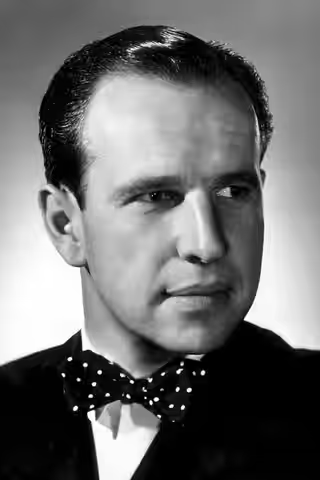
Hume Cronyn spent half a century playing the small, careful man at the edge of the frame, and made him worth watching. He is rarely the reason to see a film and quite often the reason you remember one.
Fi1m perspective
Look for him at the edge of the frame. Cronyn was a slight man with a bookish face, and the films used him as the ordinary fellow who turns out to be odd, or the odd fellow who turns out to be ordinary: Herbie Hawkins in Shadow of a Doubt (1943), Sosigenes in Cleopatra (1963). Both are films we have written about at length, one of them with real admiration, and in neither did we find room to mention him. That is the character actor's lot, and he seems to have accepted it early.
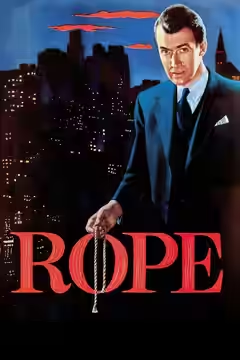
He was a stage actor first, on Broadway from 1934, and it was Hitchcock who brought him to Hollywood. Shadow of a Doubt was his first film; Lifeboat (1944) followed, and later he worked on the scripts of Rope (1948) and Under Capricorn (1949), four films with the director in all, two of them from the writer's chair. The 1940s were his busiest decade on screen: Paul Roeder in The Seventh Cross (1944), then Munsey in Brute Force (1947), a sadistic prison guard and about as far from Herbie as a man of his build could travel. Then the theatre claimed him back. From the 1950s he worked mostly on stage with Jessica Tandy, his partner in nine films and many Broadway productions, and played Polonius opposite Richard Burton in Hamlet (1964). The films returned in the 1970s, smaller parts in bigger pictures, and Cocoon (1985), with Tandy again, gave him a late audience that had never seen him young.
What he did that others did not was prepare. Cronyn was a planner, a man who worked a part out before he let it anywhere near a camera, and he knew the risk in that. "I do a lot of planning and plotting. That's my greatest weakness. If I'm not terribly careful, I'll plan to a point where it could come out cut and dried." On screen the result is a performer with nothing wasted: he does one thing at a time and you can see that he chose it. Going back to Shadow of a Doubt we were surprised by how little Herbie needs to do to stay in the mind. The film belongs to Wright and Cotten, and he stays anyway, because nothing he does looks accidental.
The reservation, and it is the only one anyone has managed, is that he was overshadowed by Tandy, and that his care could tip into tidiness. A performance with nothing left to chance can look like exactly that. We would not push the point far. Actors who play the man in the second row are supposed to be tidy; the untidy ones get noticed for the wrong reasons.
Start with Shadow of a Doubt, where he arrived already finished. Then find Brute Force, and watch the same careful face given permission to be cruel. It is the same method; only the plan is different.
Biography
Hume Blake Cronyn Jr. (also credited as Hume Blake Cronyn) was a Canadian-American actor, screenwriter and playwright. He was born on 18 July 1911 in London, Ontario, Canada, and died on 15 June 2003 in Fairfield, Connecticut, United States.
Cronyn made his Broadway debut in 1934 in Hipper's Holiday. His first film role was as Herbie Hawkins in Alfred Hitchcock's Shadow of a Doubt (1943). He also appeared in Hitchcock's Lifeboat (1944) and contributed to the screenplays for Rope (1948) and Under Capricorn (1949). He received an Academy Award nomination for Best Supporting Actor for The Seventh Cross (1944).
Cronyn frequently performed with his second wife, actress Jessica Tandy, to whom he was married from 1942 until her death in 1994. He won two Tony Awards and three Primetime Emmy Awards during his career.