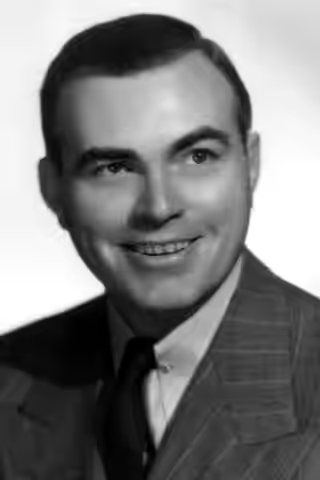
James Flavin looks and sounds as though he expects to be obeyed. We value his brisk delivery and dependability, though decades of policemen, guards and sergeants gave him limited opportunity to show us what else he could do.
Fi1m perspective
James Flavin’s firm jaw and quick speech tell us what sort of authority figure has entered the scene before the part has had much time to develop. He is a useful actor in a small space, recognisable without requiring a lengthy introduction. That became his working life after the lead in the serial The Airmail Mystery (1932). The subsequent policemen, detectives, guards and sergeants were usually supporting parts or brief appearances, often uncredited. We value the dependability, but the repetition limits what we can claim for him.
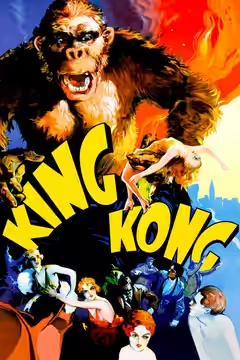
In Merian C. Cooper and Ernest B. Schoedsack’s King Kong (1933), Flavin is credited as Mate Briggs. It is an early named part in an exciting adventure, though the human performances can be stiff. We were unexpectedly moved by the ape, because the creature work and music make him worth caring about. Those strengths explain our affection for the film; they do not establish it as a great opportunity for Flavin. There is no need to make Briggs the secret of its success to take pleasure in recognising him.
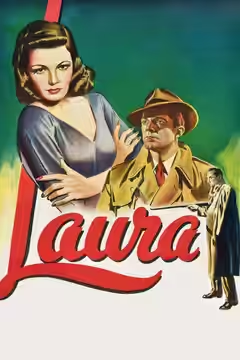
John Ford used him repeatedly, including as an uncredited guard in The Grapes of Wrath (1940). His uncredited Detective McEveety in Laura (1944) belongs to the same pattern of small parts carrying an immediately understood job. The quick delivery and distinctive physical type are practical strengths in work like this, where there is little time to establish a character. The drawback is that another policeman gives him little opportunity to surprise us. Later television work offered more authority figures rather than much escape from the typecasting.
Richard Brooks’s In Cold Blood (1967) offers a more prominent named supporting role, Clarence Duntz. It is the more useful place to look closely at Flavin, although Robert Blake and Scott Wilson supply the central chill by making the killers so ordinary. Conrad Hall’s exact, expressive black-and-white photography helps make this a film we recommend, despite its less convincing efforts to explain the violence. Start here if the face is familiar but the name has never quite stuck.
Biography
James Flavin was an American character actor whose career spanned from 1932 to 1976. He appeared in nearly four hundred films and around one hundred television episodes, often in supporting roles as policemen, detectives, guards or military figures, many of them uncredited.
Born James William Flavin Jr. in Portland, Maine, he attended the United States Military Academy at West Point but left without graduating. He began acting in summer stock in Maine in 1929 and worked in theatre companies across the country before arriving in Los Angeles around 1932. His film debut was in the serial The Airmail Mystery (1932). He played Mate Briggs in King Kong (1933) and appeared in films including The Grapes of Wrath (1940), Laura (1944), Mildred Pierce (1945) and In Cold Blood (1967). On television he had roles in series such as The Addams Family (1964) and The Twilight Zone (1959). He made his Broadway debut in the 1969 revival of The Front Page.
Flavin was married to actress Lucile Browne from 1932 until his death. He died in Los Angeles on 23 April 1976.