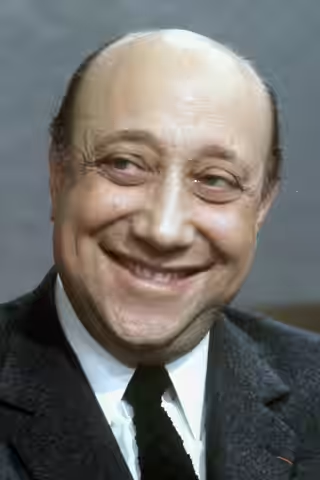
Jean-Pierre Melville’s crime films attend to manners, solitude and the rules criminals set themselves. We admire his patience with people, while Bob le Flambeur reminds us that a scene can be welcoming and still need trimming.
Fi1m perspective
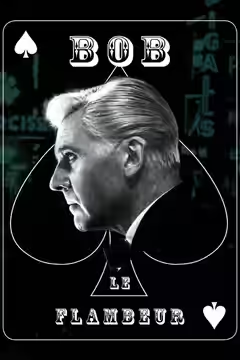
In Bob le Flambeur (1956), Jean-Pierre Melville lets the company become interesting before insisting that anything happen. Roger Duchesne gives that approach much of its appeal, and the nocturnal surroundings make it easy to settle in. We warmed to these people because Melville noticed their manners before asking us to concern ourselves with their plans. This is a good place to begin with him, provided a crime film need not produce a fresh complication every few minutes.
Melville founded his own production company and Studios Jenner. His first feature, Le Silence de la mer (1949), was made independently, using location shooting. The early literary adaptations were followed by a move into gangster cinema with Bob le Flambeur. He directed, co-wrote and produced it, and its slow pace is central to both its charm and its limitations.
The writing he shares with Auguste Le Breton is less secure when attention moves away from Bob. Anne, played by Isabelle Corey, and Paulo, played by Daniel Cauchy, cannot sustain the same interest, and atmosphere is left to do too much. Editor Monique Bonnot gives the performances room, which suits Melville until a scene has already made its point. We occasionally wanted the cut sooner. His trust in our interest is appealing, but it does not excuse every delay.
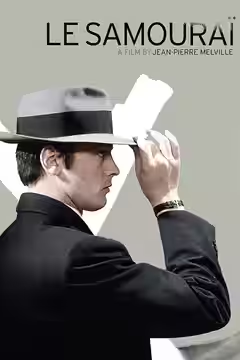
With Le Doulos (1962), his career entered a sustained run of more stylised crime films. The trench coats and fedoras draw on American noir; controlled movement and muted colours make the later films more severe. Cinematographer Henri Decaë, a collaborator on seven films, belongs in any account of that visual discipline. In Le Samouraï (1967), Alain Delon plays a lone hitman, his restraint matching Melville’s interest in men who obey private rules and say little.
The caveat is that silence and careful movement cannot make every character interesting. Bob le Flambeur offers enough warmth to make it our recommendation for anyone put off by the prospect of severe men in hats. Start there, on an evening when the plot can wait.
Biography
Jean-Pierre Melville, born Jean-Pierre Grumbach on 20 October 1917 in Paris, was a French film director, screenwriter and occasional actor. He died in Paris on 2 August 1973. He adopted the professional name Melville after the American author Herman Melville.
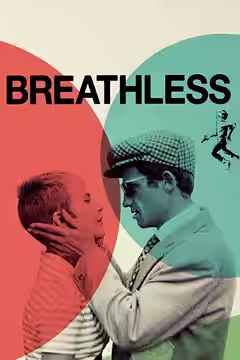
Melville served in the French Resistance during the Second World War. He directed Le Silence de la mer (1949), Bob le Flambeur (1956), Léon Morin, prêtre (1961), Le Doulos (1962), Le Deuxième Souffle (1966), Le Samouraï (1967), Army of Shadows (1969), Le Cercle Rouge (1970) and Un Flic (1972). He appeared as Parvulesco the Writer in Jean-Luc Godard's Breathless (1960).
He founded his own production company after the war and built a studio in Paris. His films often centred on crime or wartime themes.