Jeremy Brock writes about real people and real institutions at the size of a room: a widowed queen and her servant, a dictator and his doctor, a hospital nobody will pay for. Modest, dependable, and in Mrs Brown quietly moving.
Fi1m perspective
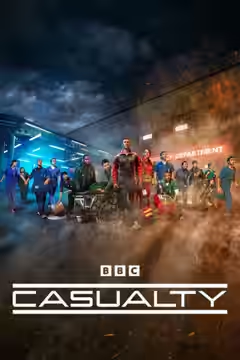
A trolley comes through the doors. Somebody who was fine an hour ago is not fine now, and a nurse who has seen it before gets on with it. That is the engine Jeremy Brock and Paul Unwin built for Casualty in 1986, and forty years on nobody has found a better one. Brock is not a showy writer. His habit is to take something public, a hospital, a reign, a tyranny, and put two people in a room with it until it shows on their faces.
He met Unwin at Bristol in 1979 and started as a script editor at the BBC. The first series of Casualty, fifteen episodes from 6 September 1986, was their answer to what they saw being done to the health service, and it is angrier than anything the programme has made since. Film came later. Mrs Brown (1997), for John Madden, was his first feature screenplay; Charlotte Gray (2001) followed, then The Last King of Scotland (2006, written with Peter Morgan), which began a run of three films with Kevin Macdonald that took in The Eagle (2011) and How I Live Now (2013). In between he wrote and directed Driving Lessons (2006), drawn from his own life, and he has since gone back to television with Diana and I (2017) and A Very Royal Scandal (2024).
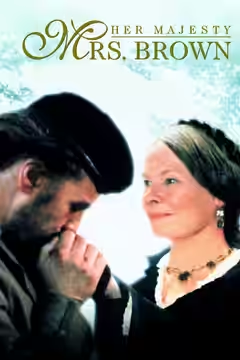
What works is the small scale. Mrs Brown has no grand design and almost nothing that could be called an event, and it moved us more than its plainness led us to expect, because Brock is content to let a widow and a servant spend 105 minutes learning to tell each other the truth, and with Judi Dench and Billy Connolly doing it that is plenty. He plots everything before he writes and then keeps the outline to a page or so, and the films feel like that: the shape is firm and the scenes are loose inside it. He is also good at the famous monster as a person rather than a cartoon, which is why The Last King of Scotland is the title most people reach for first.
The faults are the faults of modesty. Casualty turned dependable and formulaic, as anything must that has to keep going for four decades, and Brock cannot answer for every episode since, but the anger of that first run did not outlast it. Films built on two people talking stand or fall on the two people; Mrs Brown is plainly shot and often static, and without Dench and Connolly there would not be much there. Some of the later scripts, Dark Crimes (2016) among them, were received coolly, and we will not pretend they are the ones to seek out.
Brock once said that "Screenwriting isn't romantic – most of the time it's just work." The line fits him. Give him a famous person everybody thinks they already know and a drawing room to put them in, and he will give you an evening worth having. On what we have seen, that is a good evening rather than one we would send a stranger to, and we suspect he would not mind being told so.
Biography
Jeremy Brock (born 14 July 1959) is a British screenwriter, director and playwright. He studied drama at the University of Bristol, where he met Paul Unwin, with whom he co-created the long-running BBC medical drama Casualty in 1986.
Brock wrote the screenplay for Mrs Brown (1997), which earned him an Evening Standard award. He co-wrote the screenplay for The Last King of Scotland (2006) with Peter Morgan, for which they received the BAFTA Award for Best Adapted Screenplay. His other screenplays include Charlotte Gray (2001), Driving Lessons (2006, which he also directed), Brideshead Revisited (2008) and The Eagle (2011). He was appointed MBE for services to drama.