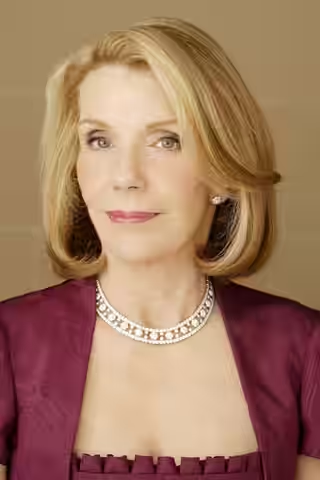
Jill Clayburgh played clever, capable women at the moment the ground went from under them, and made the recovery look like work rather than a montage. For a few years in the late 1970s nobody in American film did it as well.
Fi1m perspective
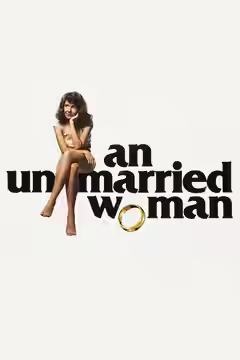
A husband cries on a Manhattan pavement and explains that he is leaving. His wife listens, walks a few yards, and is sick into a litter bin. That is Jill Clayburgh in An Unmarried Woman (1978), and it is the scene we still think about. We watched it with a hand over our mouth, and what did it was not the tears, which are his, but the walking: Erica sets off as if she can leave the news behind her, and her body disagrees. Clayburgh plays a woman who has been competent all her life and is suddenly sure of nothing, and she never once turns to the camera to ask for our sympathy. The voice helps. It is cracked and slightly wobbly, trained on stages, and it sounds like nobody else's.
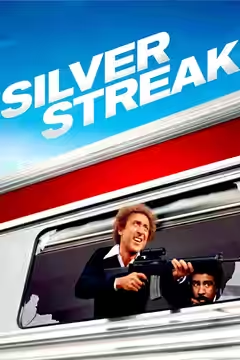
The stage came first: summer stock, repertory in Boston, Broadway in The Rothschilds (1970) and Pippin (1972). Films from 1969 and a good deal of television filled the years before anyone paid much attention. Silver Streak (1976), opposite Gene Wilder, showed she could do the fast, dry comic timing the old screwball pictures ran on, and Semi-Tough (1977) confirmed it. Then Paul Mazursky gave her Erica, and for about three years she was the face American cinema reached for when it wanted a woman on her own: Starting Over (1979), and Caterina Silveri in Bernardo Bertolucci's La Luna (1979), a far harder part in a far stranger film.
What she did well was hold comedy and grief in the same scene without letting either one win. In An Unmarried Woman she is funny with her friends and wretched in her kitchen within the same reel, and the join does not show. What she did less well was size. Asked to be larger than life, as Carole Lombard in Gable and Lombard (1976), she looked like a real person who had wandered onto the wrong set. Her gift was for people you might actually meet, and Hollywood's idea of a star part is rarely one of those.
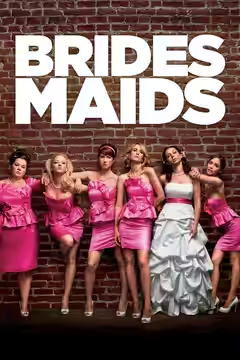
After the peak the offers thinned, and from the 1980s she worked mostly in television and the occasional film until 2010. Her last appearance, as Annie's mother in Bridesmaids (2011), came out after her death. Our review did not single her out, and that is fair: it is a small part in a film that belongs to Kristen Wiig. But she is unmistakably herself in it, dry and unhurried, a woman who has seen her daughter's trouble before and is not going to make a fuss.
She once complained that films did not show how interesting and vibrant women are, and that nobody treasures them as they get older. Her own filmography is the evidence for the prosecution. Start with An Unmarried Woman, and then notice how few films afterwards asked her to do anything like it again.
Biography
Jill Clayburgh was an American actress. Born in New York City, she studied at Sarah Lawrence College and began her career on Broadway in the late 1960s, appearing in the original productions of the musicals The Rothschilds (1970) and Pippin (1972).
She received Academy Award nominations for Best Actress for her roles in An Unmarried Woman (1978) and Starting Over (1979), and won the Cannes Film Festival Award for Best Actress for the former. Clayburgh appeared in films including Silver Streak (1976), Running with Scissors (2006) and Love & Other Drugs (2010), as well as television series such as Nip/Tuck and Dirty Sexy Money. Her final film role was as Annie's mother in Bridesmaids (2011). She died in 2010.