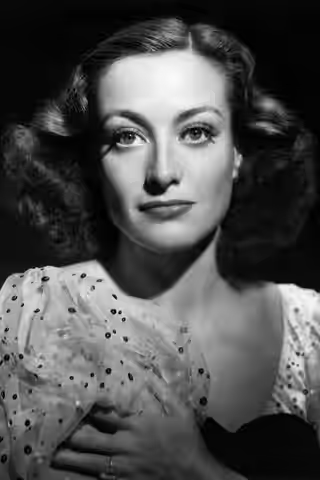
Joan Crawford played women who wanted more than they had been given and worked for it, and she played them with her chin up and her eyes wet. In Mildred Pierce that was a great performance. Later it became a manner.
Fi1m perspective
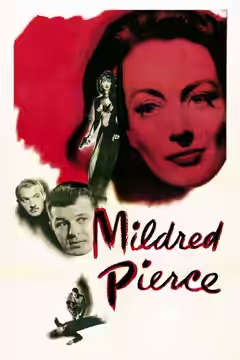
The moment we keep coming back to is a small one. In Mildred Pierce (1945) her daughter puts the waitress's uniform on the maid as a joke and lets her mother know what she thinks of women who wait tables, and Crawford's face falls and then sets. Nobody speaks for a second, and she does all the acting in it. She came up in silent films and never lost the habit of doing the work with her eyes before a line arrived. Around that face she built a silhouette nobody has mistaken for anyone else's: padded shoulders, strong brows, heavy make-up.
She arrived in Hollywood in the mid-1920s as a dancer and signed with MGM in 1925, and for most of two decades she played girls who wanted up and out. Flappers first, then shopgirls; Flämmchen in Grand Hotel (1932) is the type at its most watchable. The studio repeated it often enough that critics started calling it the Crawford formula, and not kindly. The MGM part most remembered is a supporting one, Crystal Allen in George Cukor's The Women (1939), the villain in a cast with no men in it. She left MGM in 1943 for Warner Bros.
Mildred Pierce is what she went there for. Michael Curtiz's film needs a woman who has decided to be respectable and will work herself into the ground to prove it, and Crawford plays her with her chin up and her eyes wet, never once asking us to like her. Milo Anderson's clothes carry the rise, from housedress to tailored suits to a fur she wears without quite believing in it. She noticed what the camera was doing too: "I was used to the look at Metro, where everything, including the war pictures, was filmed in blazing white lights. Even if a person was dying there was no darkness. But when I saw the rushes of Mildred Pierce I realised what Ernie [Haller, cameraman] was doing." She let the shadow do some of the work and did the rest herself. When Mildred apologises to Veda after the uniform scene we wanted to reach into the screen and stop her, and we have watched a great many films without wanting that.
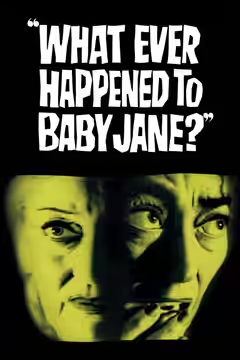
After 1945 came noir through the 1950s, including Sudden Fear (1952), which she also produced and in which the silent training pays off again in scenes with no dialogue to lean on. Then horror, and What Ever Happened to Baby Jane? (1962) for Robert Aldrich, opposite Bette Davis. We have not reviewed those here. What we can say is that the manner which is a performance in Mildred Pierce had by then become something she could put on, and the later films often ask her to put it on loudly. Effort was never her problem. Knowing when to stop was.
Start with Mildred Pierce. If it takes you, The Women shows what she could do when the picture was not about her. Leave the horror until you know her face well enough to notice what it is doing under the shouting.
Biography
Joan Crawford was an American actor, also credited as Lucille Fay LeSueur, Lucille Le Sueur, Billie Cassin and Lucille Fay Le Sueur. She began her career as a dancer in travelling theatrical companies and on Broadway before signing a contract with Metro-Goldwyn-Mayer in 1925.
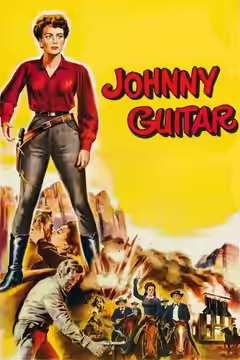
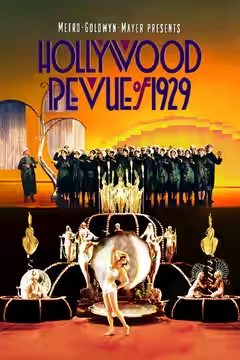
Crawford appeared as Self in The Hollywood Revue of 1929 (1929). Among the films for which she is known are Grand Hotel (1932), The Women (1939), Mildred Pierce (1945), Johnny Guitar (1954), What Ever Happened to Baby Jane? (1962) and Hush... Hush, Sweet Charlotte (1964). She won the Academy Award for Best Actress for Mildred Pierce.
In 1955 she became involved with the Pepsi-Cola Company through her marriage to its president Alfred Steele. After his death in 1959 she served on the board of directors until 1973. She continued to act in film and television through the 1960s.