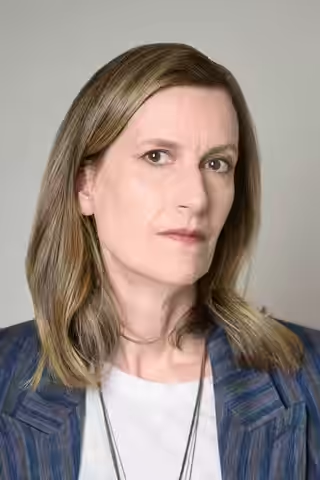
Joanna Hogg puts the camera down and lets well-off English people fail to say what they mean. It is slow and exact and often quietly painful, and in The Souvenir it is honest about being young and wrong in a way few films manage.
Fi1m perspective
A Joanna Hogg scene tends to go like this. The camera is set down at the far side of a room, about where a guest who knows nobody would stand, and it stays there. People come in, sit, talk about lunch or the boiler, and somewhere in the talk one of them says a thing that cannot be taken back, and the others carry on as if it had not been said. There is no music to tell us it has happened. We have to have been watching.
She came to this late. She made super-8 films in the late 1970s with Derek Jarman as a mentor, left the National Film and Television School in 1986, and then spent about fifteen years in music videos and television, EastEnders among them. Her first feature, Unrelated, arrived in 2008, when she was 47. She has said, "Having endlessly explored camera movement in my TV days, I wanted to create a more contemplative cinema." Unrelated, Archipelago (2010) and Exhibition (2013) are that cinema: fixed frames, natural light, professional actors alongside people who have never acted, well-off English families watched until they give themselves away. Archipelago in particular is exact about how a family gets on its own nerves.
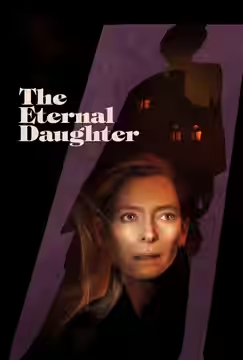
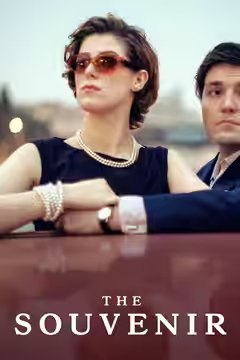
Then she turned the camera on herself. The Souvenir (2019), The Souvenir Part II (2021) and The Eternal Daughter (2022) follow Julie, a film student who becomes a film-maker, and they are drawn from Hogg's own life. The first is the best thing she has made. Honor Swinton Byrne plays Julie and Tom Burke plays Anthony, the older man she loves, and Burke makes him persuasive enough that the affair is comprehensible, which is the whole job. Hogg shows the damage without inviting us to feel clever for spotting it. Tilda Swinton, who has now worked with her four times, plays Julie's mother Rosalind with a tenderness the film needs. Ed Rutherford, her cinematographer on three films, lights rooms with what is already in them.
The method has costs. The Souvenir leaves gaps between its episodes that make Julie harder to read than she needs to be. In The Eternal Daughter, where Swinton plays both Julie and the ageing Rosalind in an empty Welsh hotel, there are stretches of Julie pacing corridors at night in which we were waiting rather than watching, and a sullen receptionist who is funny three times and asked to be funny about eight. Hogg's England is a narrow one, comfortable and well spoken, and she has shown little interest in leaving it.
And yet the birthday dinner in that film, a cake with one candle carried into a dining room laid for two and built for forty, moved us more than we were prepared for, and we were uneasy about being moved, because Julie is doing to her mother what Hogg is doing to hers. Hogg films her own bad conscience and leaves it in. Start with The Souvenir, on an evening when you are not tired. It will not raise its voice to wake you.
Biography
Joanna Hogg is an English film director and screenwriter. Born on 20 March 1960 in London, she studied direction at the National Film and Television School after early experimental work mentored by Derek Jarman. Her graduation film Caprice (1986) starred Tilda Swinton.
She began her career directing television episodes and music videos before making her feature debut with Unrelated (2007), which she wrote and directed. Subsequent features include Archipelago (2010), Exhibition (2013), The Souvenir (2019), The Souvenir: Part II (2021) and The Eternal Daughter (2022), on which she also served as producer. Two of her films topped the Sight & Sound annual poll for best film.