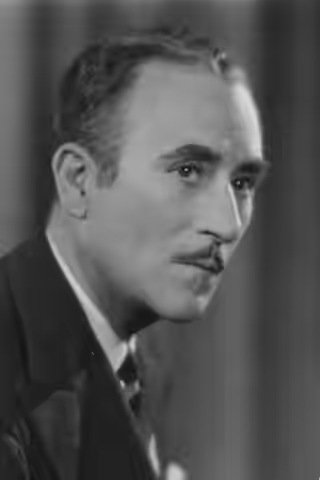
John Halliday makes well-bred men sound accustomed to getting their way. We value his polish, particularly when the gentleman is a rogue, though The Philadelphia Story shows how readily charm can make bad behaviour seem excusable.
Fi1m perspective
Halliday speaks with the assurance of a man who expects no interruption. The upper-crust British accent and polished delivery suit his aristocrats, businessmen and charming rogues, giving them an immediate claim on our attention. We like him most when that respectable manner belongs to somebody whose conduct deserves scrutiny. He can make a troublesome man seem agreeable company without asking us to overlook the trouble entirely.
He brought experience in sophisticated stage comedy to his regular Hollywood supporting work in the early 1930s. Millie (1931) gave him an early leading film role, but supporting parts offered plenty of uses for his worldly manner. In Desire (1936), he plays Carlos Margoli, a cunning accomplice alongside Marlene Dietrich. The appeal of such casting is straightforward: his cultivated speech need not tell us anything reliable about the man's honesty.
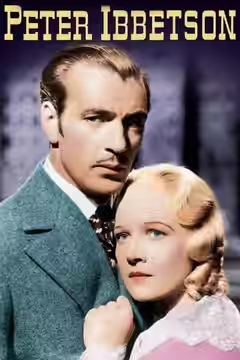
Peter Ibbetson (1935) puts that cultivated authority into Henry Hathaway's romantic fantasy, casting him as the jealous Duke of Towers. It is a good fit for an actor so practised at suggesting that he expects deference. Yet our chief attachment to the film comes through Ann Harding and cinematographer Charles Lang, whose photography helps make the lovers' bond convincing when Gary Cooper cannot. Halliday supplies a recognisable figure of worldly authority, though the story still requires considerable indulgence.
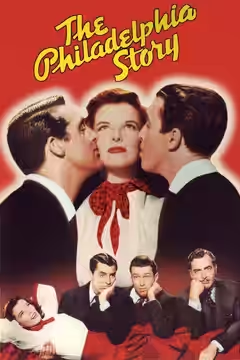
George Cukor's The Philadelphia Story (1940) is the stronger film and puts Halliday's charm to more troubling use. His Seth Lord is the charming, philandering father of Katharine Hepburn's character. We laughed, then felt uneasy, because Tracy is asked to forgive while Halliday makes her errant father such pleasant company. He is well cast; our reservation is about a comedy that makes forgiveness sound like her duty, with his personable manner helping the demand seem reasonable. Start here for Halliday, but do not feel obliged to take the father's side.
Biography
John Halliday was an American actor of stage and screen. He appeared on Broadway from 1912, notably in sophisticated comedies including The Circle (1921), Sour Grapes (1926), Jealousy (1928) and Rain from Heaven (1934). He made his film debut in the silent era and became a character actor in Hollywood sound films of the 1930s and 1940s, often playing suave or aristocratic figures.
His screen credits include Peter Ibbetson (1935), Desire (1936), Intermezzo: A Love Story (1939) and The Philadelphia Story (1940), in which he played Seth Lord. His final role was in Lydia (1941). He died in Honolulu, Hawaii, on 17 October 1947.