John Osborne's acting, in the films we have reviewed, comes to two small parts for Mike Hodges, a crime boss and a priest. The screen career that matters is the one he wrote, and Tom Jones shows how good it was and where it ran out.
Fi1m perspective
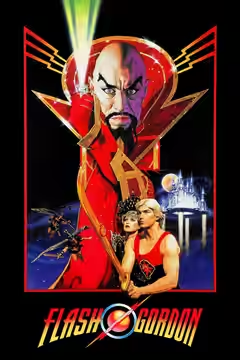
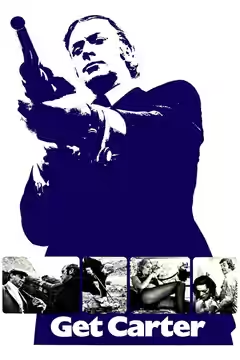
John Osborne appears in two Mike Hodges films nine years apart, and both times as a man with authority over everyone around him: Cyril Kinnear, the crime boss, in Get Carter (1971), and an Arborian priest in Flash Gordon (1980). Our reviews of both films do not mention him, which tells you the size of the parts. What he brought was the name. By 1971 the name was Look Back in Anger, the 1956 Royal Court play that put a raging, articulate young man on stage and changed what British plays sounded like, and a playwright of that standing sitting in a gangster film is a small joke the film does not need to explain.
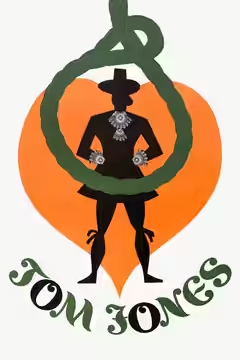
The screen career that counts was written, not acted. He and Tony Richardson founded Woodfall Film Productions in 1958 and filmed his own plays, Look Back in Anger (1959) and The Entertainer (1960), the latter written for Laurence Olivier as Archie Rice. Then in 1963 the two of them left the bedsits behind and made Tom Jones, which took Fielding's 1749 novel and turned it into the noisiest costume film of its decade. For ninety minutes it is funny, handsome and full of life, and the life is in the writing as much as in Walter Lassally's light.
Then it goes to London and we felt it slow down under us, and the slowing is partly Osborne's doing. Fielding's last third is thick with plot, and he keeps most of it: Lady Bellaston, Lord Fellamar, a masquerade, a duel. A film that had been leaping from field to field has to stop and explain, and explaining was never his gift. His plays run on the tirade, the long self-lacerating speech a man delivers because nobody will interrupt him, from Jimmy Porter to the disintegrating solicitor of Inadmissible Evidence (1964). Exposition is the opposite of a tirade. It needs the writer to get out of the way, and Osborne never much liked getting out of the way.
The later work bears that out. A Sense of Detachment (1972) and Watch It Come Down (1976) were received as self-indulgent, and the man who had been at the centre of British theatre in the fifties and sixties spent the following decades at its edge, writing television plays and two volumes of autobiography, A Better Class of Person (1981) and Almost a Gentleman (1991). He knew it. "It’s a mistake to stick around too long," he wrote in a letter about his later career.
We would not send anyone to Get Carter or Flash Gordon for Osborne; see the first for Michael Caine and Hodges, the second for Max von Sydow and the costumes. See Tom Jones for the first hour and a half, and listen to how the lines sit in the actors' mouths, because that is the Osborne that matters on screen. The small parts are a famous writer's afternoons off.
Biography
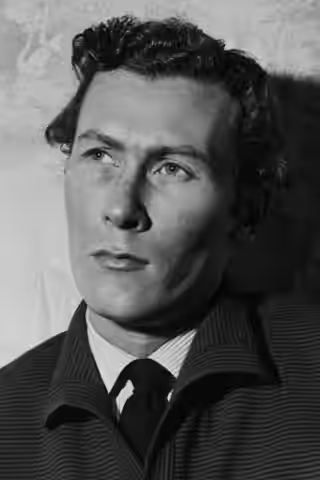
John Osborne was an English playwright, screenwriter and actor. Born in Fulham, London, on 12 December 1929, he died on 24 December 1994.
His 1956 play Look Back in Anger transformed English theatre. He wrote screenplays for the films Tom Jones (1963) and The Charge of the Light Brigade (1968), and adaptations including The Entertainer (1960). He also appeared as an actor in films such as Get Carter (1971), in which he played Cyril Kinnear, and Flash Gordon (1980).