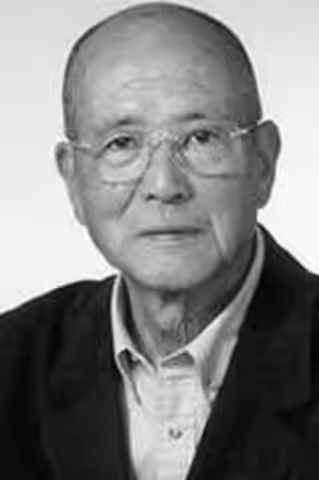
Junkichi Orimoto spent seven decades as the man in uniform at the far end of the table, and made a method of it: breathe in, then say the line, and let the audience fill the gap. It is the point of him and the limit.
Fi1m perspective
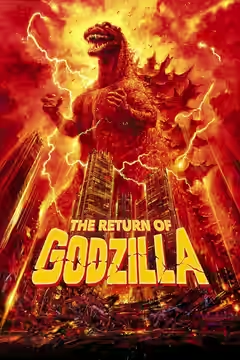
In The Return of Godzilla (1984) the monster comes back and the Cabinet sits down to decide what to do about it, and among the grey men round the table is the Director-General of the Defense Agency. That is Orimoto, doing what he did in most of his roughly two thousand film and television parts. He listens, he breathes in, he says his line, and the film moves on. We said of that film that the meetings are better than the love story and that the people are stiff. He is one of the men in the meetings, stiff in the way a defence chief ought to be, and our review, like most, did not stop to name him.
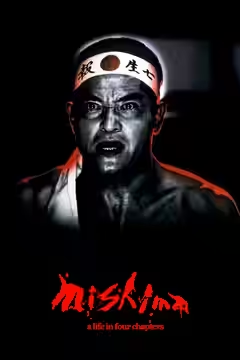
He came from the stage, joining the Shinkyō company in 1949 after leaving a factory job, and his first film was Yamabiko Gakkō (1952) for Tadashi Imai. He co-founded the Seihai company in 1954 and stayed for twenty-five years until it dissolved around 1980, then went freelance, which in his case meant everything: jidaigeki, yakuza pictures, war films, monsters, family dramas. He is Kurahashi in Three Outlaw Samurai (1964), an uncredited co-worker in Masaki Kobayashi's Kwaidan (1965), Hideo Hayakawa in Kinji Fukasaku's Battles Without Honor and Humanity: Final Episode (1974), one of five films with Fukasaku. Sadao Nakajima used him repeatedly too. A year after the Cabinet scenes he was General Mashita in Paul Schrader's Mishima: A Life in Four Chapters (1985), one of a large cast around Ken Ogata, and he was still working in 0.5 mm (2014) and blank13 (2018).
Late in life he told the film historian Taichi Kasuga that he had come to think the lines are simply what you say between breaths, and that if you breathe in before speaking, the audience will imagine something in the pause whether or not you were thinking anything at all. We felt slightly caught out reading that. It names exactly the pause we had sat through in those Cabinet scenes and credited to the editor, or to nobody, and it explains how one man could be cast as a general, a police officer, a yakuza boss and a grandfather across seventy years without anyone finding him wrong for the part.
The reservation is the one the career invites. He remained a supporting player and his name never travelled far, and our own reviews of Mishima and The Return of Godzilla do not single him out, which we cannot honestly say they should have. Work like his is only visible when the film around it is thin. If you want to see what he did, watch any Cabinet scene in The Return of Godzilla and try to catch him doing anything. You will not, and that is the job done.
Biography
Junkichi Orimoto was a Japanese actor. He began his career in 1949 with the Shinkyō theatre company and made his film debut in Yamabiko Gakkō (1952). He appeared in supporting roles across more than six decades of film and television, often collaborating with directors Kinji Fukasaku and Sadao Nakajima.
Orimoto's credits include Three Outlaw Samurai (1964), Kwaidan (1965), The Return of Godzilla (1984) as the Director-General of the Defense Agency, Mishima: A Life in Four Chapters (1985) as General Mashita, Message from Space (1978), Battles Without Honor and Humanity: Final Episode (1974), The Mole Song: Undercover Agent Reiji (2013) and 0.5 mm (2014). His final film appearance was in blank13 (2018). He died in 2019.