Kenji Kamiyama builds worlds and is best with time to fill them; the run from Ghost in the Shell: Stand Alone Complex to Eden of the East is the work to see. Drawing other people's universes since, he has been careful, handsome and seldom surprising.
Fi1m perspective
A Kenji Kamiyama scene usually begins with the setting, not the people. Before anyone speaks, the drawing has told you the hour, the weather and how long these people have been sitting there, and the camera moves as though a crew had needed to find somewhere to put it. That is the background artist in him: he spent his early years painting other people's worlds, on Akira (1988) and Kiki's Delivery Service, before he was given one to run. When he was, on Ghost in the Shell: Stand Alone Complex (2002–2005), the result was patient, talky and sure of what it thought, and it remains the clearest account of what he does.
The career divides cleanly enough. First the apprenticeship at Production I.G, in Mamoru Oshii's workshop, with a screenplay for Blood: The Last Vampire and the animation direction on Jin-Roh: The Wolf Brigade (1999). Then a decade in which the worlds were his own or nearly so: Stand Alone Complex, Moribito: Guardian of the Spirit (2007), Eden of the East (2009), which he wrote as well as directed, and later the original feature Napping Princess (2017). Since then he has mostly been hired to draw universes that already exist: Ultraman (2019), Blade Runner: Black Lotus (2021), an episode of Star Wars: Visions and The Lord of the Rings: The War of the Rohirrim (2024). Along the way he has twice shared the director's chair with Shinji Aramaki.
What works is the thinking. His television gives an idea time to turn: a society, a machine that has changed it, the people who have to live with both, and long conversations about what to do next. Some viewers find that heavy going, too much politics and too many threads, and Eternal 831 (2022) drew that complaint. We would rather a director who thinks too much than one who does not think.
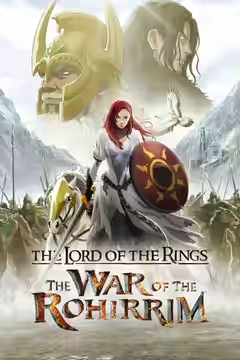
The trouble with the borrowed worlds is that the borrowing shows. The reviews of Black Lotus split over its computer animation. The War of the Rohirrim is drawn by hand, which suits him, and it still spends a great deal of its 134 minutes looking at a wall with snow on it. Helm Hammerhand gets a page in Tolkien's appendices; Philippa Boyens's story stretches that to feature length, and careful drawing cannot fill the space. We were bored by the second hour of that siege and then slightly cross, because the man who made Stand Alone Complex knows what to do with time and here had time and nothing to put in it. Where the film borrows, the tracing shows.
He has said of his Star Wars: Visions episode, "I’d love to have the chance to make a full length feature out of this." We would sooner see him given a long run of episodes and a world nobody has drawn before.
Biography
Kenji Kamiyama (神山 健治) is a Japanese director and writer. Born on 20 March 1966 in Saitama Prefecture, he began his career as a background artist on films including Akira (1988) and Kiki's Delivery Service (1989). He later joined Production I.G, where he contributed the screenplay for Blood: The Last Vampire (2000) and worked as animation director on Jin-Roh: The Wolf Brigade (1999).
Kamiyama made his directorial debut with the short MiniPato (2002) and gained prominence as series director and writer on Ghost in the Shell: Stand Alone Complex (2002) and its follow-ups. His other credits include directing Eden of the East (2009), episodes of Star Wars: Visions (2021) and Blade Runner: Black Lotus (2021), and the feature The Lord of the Rings: The War of the Rohirrim (2024).