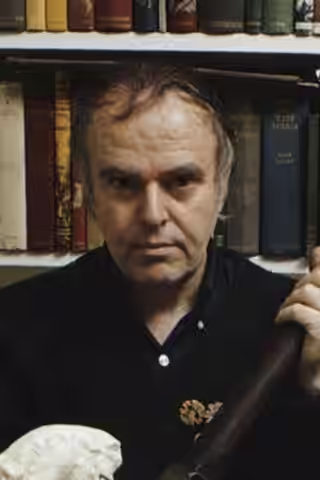
A small, sharp Welsh face in the corner of more than eighty films, wanting something and not getting it. Griffith was better at the wireless key and the comic grovel than most leading men were at anything, then went off and made his own films.
Fi1m perspective
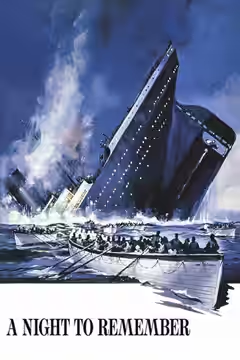
In A Night to Remember (1958) Griffith plays Jack Phillips, the wireless operator, and what we remember is that he stays at his key. The film is full of people doing their jobs while the ship goes down, and Phillips has the least to say and the most to do: he taps, he listens, he taps again. It is the sort of part a busier actor would have decorated, and Griffith does not. It has stayed with us longer than several passengers who were given speeches, because it is the one performance in the film that is entirely about the work and not at all about being watched.
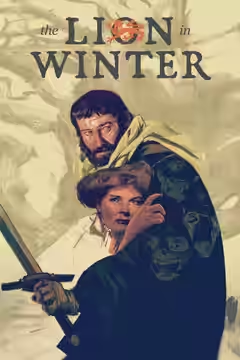
That was not his usual line. From the early 1940s to the 1980s Griffith was the man British directors sent for when a scene needed someone ambitious, sycophantic or faintly sinister in the second row, and he played it in more than eighty films. The Boulting brothers used him repeatedly and he made six films with Peter Sellers, most often as the foil or the comic-pathetic figure who is not in on the joke: Dai in I'm All Right Jack (1959), and Ieuan Jenkins in Only Two Can Play (1962), the part most often cited and played on home ground in Wales. He turns up as a strolling player in The Lion in Winter (1968), in The Wild Geese (1978), and as the mad old man at the first wedding in Four Weddings and a Funeral (1994). Our review of the Harvey film does not mention him, which tells you how small the part is.
The weakness is in the casting, not in him. Weaselly is a narrow beat, and he was asked to hit it so often that whatever lay on either side of it went largely unused; the stillness of Phillips is a reminder of what was available. He had no formal training, having started at the Cambridge Festival Theatre in 1937 and learned the rest in rep and at the Old Vic, and the parts he was given show the rep actor's virtues, quick, exact, unfussy, rather than any chance to sit at the centre of a film.
From the mid-1960s he stopped waiting to be asked. Beginning with Soldiers of the Widow (1967), he wrote, presented and directed his own historical documentaries, mostly on the Boer War and Irish history, acting out the figures himself as a one-man storyteller. "I am an actor but what I am now is a Welsh Puritan preacher – I preach sermons about history through my documentaries," he said, and sermon is the right word: the style is frenetic and hectoring and it can wear you down. It is also entirely his own, which nothing the Boultings gave him ever quite was.
Start with the wireless room. Then find Only Two Can Play, and watch what he does with a part that exists to be laughed at.
Biography
Kenneth Griffith (12 October 1921 – 25 June 2006) was a Welsh actor and documentary filmmaker. Born in Tenby, Pembrokeshire, he began his stage career in the late 1930s and later joined the Old Vic company.
He appeared in numerous British films from the 1940s onwards, including A Night to Remember (1958), The Lion in Winter (1968) as a strolling player, The Wild Geese (1978), Four Weddings and a Funeral (1994) and The Englishman Who Went Up a Hill But Came Down a Mountain (1995). Griffith also produced and presented several documentaries, notably on historical and political subjects.