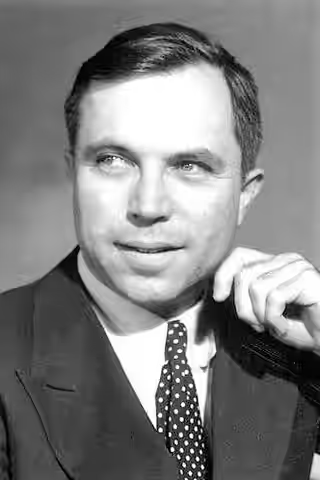
King Vidor never settled on a genre or a style, and his critics have held it against him. What he had instead was patience: he put the camera on a face, ordinary and under pressure, and left it there until it gave something away.
Fi1m perspective
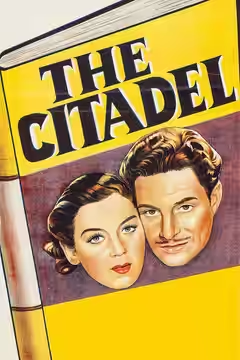
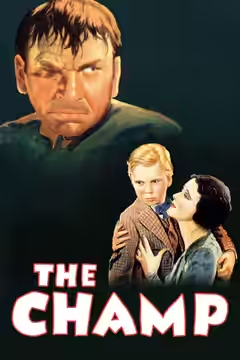
In The Champ (1931), Jackie Cooper cries, and he cries the way children do, trying to stop. Most directors of the period would have cut to Wallace Beery to help him along. Vidor stays. He does the same thing seven years later in The Citadel (1938), when Robert Donat is delivering a baby that will not breathe: a lamp, a basin of water, the doctor's hands, and Charles Frend's cutting holding on them longer than we expected. We held our breath through that scene knowing what was coming, and it made no difference. That is Vidor's trick, if he can be said to have one. He waits.
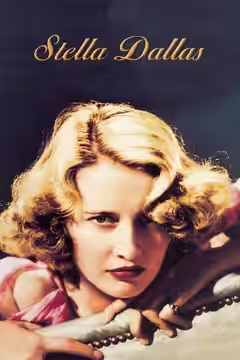
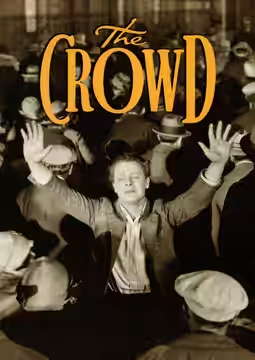
He had been waiting since the silents. He started on shorts in 1913, reached Hollywood in 1915 as an extra and a scriptwriter, and made his first feature, The Turn in the Road, in 1919. The Big Parade (1925) at MGM made his name with a war and a crowd; The Crowd (1928) made it properly with one clerk lost in a city. He came through the change to sound with Hallelujah (1929), then spent two decades on studio adaptations of popular fiction: The Champ, Stella Dallas (1937), The Citadel, and later the big Technicolor pictures, Duel in the Sun (1946) for Selznick and The Fountainhead (1949). War and Peace came in 1956, Solomon and Sheba in 1959, and then he stopped.
The charge against him has always been that there is no Vidor film, only Vidor films: a war picture, a boxing weepie, a doctor's life, a western, an argument about architecture. There is something in it. The later work can be lurid and the melodrama sometimes runs away with him; Beyond the Forest (1949) is the one usually cited. But the two films we have reviewed suggest the charge misses what he was doing. Both put an ordinary man against something too large to fight, a profession in one and a bar floor in the other, and in both the effect comes from long takes, plain cutting and almost no music. Gordon Avil's camera on The Champ barely moves, as cameras in 1931 did not, and Vidor turns that to his advantage, keeping father and son in one frame so that we watch the boy watching. In The Citadel the valley scenes are hard, dirty and alive; London, where the script starts to preach, is where his interest visibly drops.
He wrote in his memoir that he wanted to use the screen "as an expression of hope and faith". It sounds pious, and on the London stretch of The Citadel it is. On the boy in the flat cap it is not. We knew within twenty minutes how The Champ would end and we still sat there, got at and slightly ashamed of it. Start with those two, then go back to The Crowd and see what the patience looked like before anyone was allowed to talk.
Biography
King Vidor was an American film director, producer and screenwriter. He was born in Galveston, Texas, on 8 February 1894 and died in Paso Robles, California, on 1 November 1982.
Vidor began working in film in the 1910s and directed his first feature in 1919. His breakthrough came with The Big Parade (1925). Other notable films include The Crowd (1928), Hallelujah (1929), The Champ (1931), on which he also served as producer, Stella Dallas (1937), Duel in the Sun (1946) and War and Peace (1956).
He received five Academy Award nominations for Best Director and was awarded an Honorary Academy Award in 1979.