Hissrich makes fantasy television that trusts its audience to keep up, and for one season of The Witcher the trust paid off. The seasons since have grown the map and mislaid the man at its centre.
Fi1m perspective
The first season of The Witcher (2019) never tells you it is running on more than one timeline. Geralt is in one place and year, Yennefer and Ciri in others, and nothing on screen announces the gap; you are left to work it out from a passing remark and a change of season. Hissrich has said she is "a firm believer in challenging audiences and I think that they can keep up", and she built eight episodes on that bet, with Dunkirk somewhere in the back of her mind. We spent a good part of the season faintly lost and slightly cross about it, and when the strands finally met we felt rewarded rather than tricked, which is rarer in fantasy television than it should be.
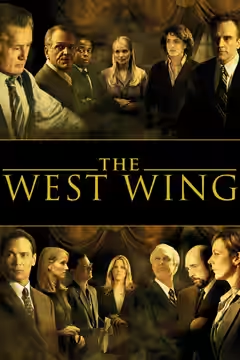
She learned the trade on The West Wing, joining as a researcher in 2002 and leaving four years later a credited writer, and then spent most of a decade on network drama: Private Practice, Parenthood, Power. The move to genre came with Daredevil (2016) and The Defenders (2017), and a teleplay on The Umbrella Academy (2019). We rate the first season of Daredevil highly, but she was one writer among several on it and we would not hand her the credit. The Witcher, which she was given to run in 2017, is the first thing that is hers.
What works is what she put at the centre: Henry Cavill's Geralt, a bard worth the trip, and a Yennefer whose life before she meets the witcher is drawn out at a length Sapkowski's books never gave it. Hissrich's habit is to find the family story inside the monster story, a broken household slowly assembling itself, and to hire specialists for the swords and sorcery. The writing team she led with Mike Ostrowski and Javier Grillo-Marxuach, with Tomek Baginski directing, delivered that in season one.
What does not work is what she added afterwards. Each season brings more kingdoms, more sorcerers and more council chambers, and the man the programme is named after gets less of the running time. By the later seasons we found ourselves waiting for Geralt to turn up in his own show. Blood Origin (2022), the prequel she created, pushed the same instinct further back in time; we have not reviewed it and will not judge it here.
The family story she found in Sapkowski is a good one, and a small one, and the Continent she keeps building around it gets in its way. She can plainly write a season that trusts its audience. We would like to see one that trusts its subject.
Biography
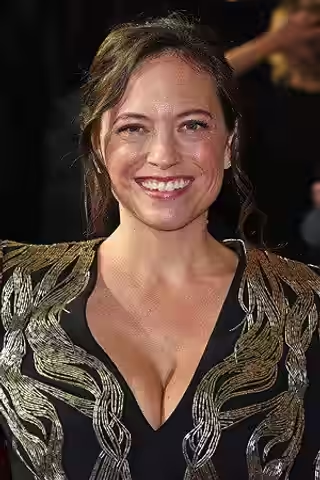
Lauren Schmidt Hissrich is an American television writer and producer. Born in Westerville, Ohio, she graduated from Wittenberg University in 2000 with a BA in English literature and creative writing. She began her career with an internship on The West Wing, later serving as staff writer, story editor and researcher on the series from 2002 to 2006.
She has written for Justice, Private Practice, Parenthood, Daredevil, The Defenders and The Umbrella Academy. She is showrunner and executive producer of the Netflix series The Witcher (2019–present) and signed an overall deal with the streamer in 2021.