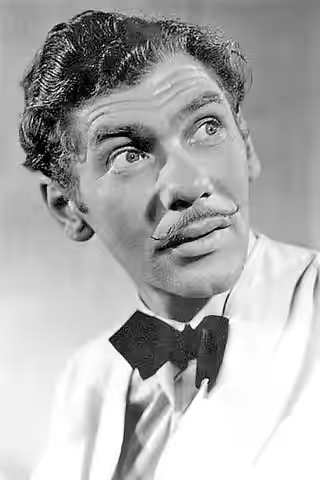
Leonid Kinskey spent forty years playing excitable foreigners in the corners of other people's comedies, with a mime's body and a manner pitched a notch louder than everyone around him. The parts were small and the pleasure in them is real.
Fi1m perspective
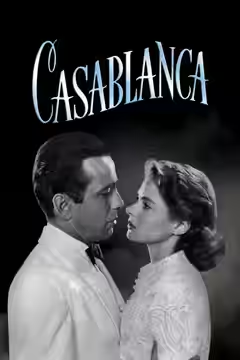
Start with the bartender. In Casablanca (1942) Kinskey is Sascha, the exuberant man behind the bar at Rick's, and it is the part most people know him for. It was enlarged for him after another actor was replaced, and once you have noticed him you keep noticing him: a small, bright, over-eager presence in a film that has other things on its mind. That is the Kinskey effect in miniature. He was rarely the point of a scene, and he was rarely dull in one.
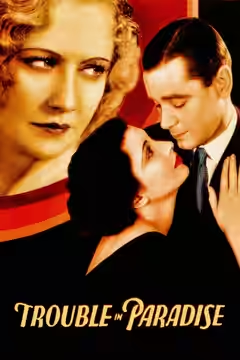
He came to it by an odd road. Trained as a mime in the imperial theatres of St Petersburg, he left Russia in 1921, toured Europe and South America, and was in New York by about 1924, where he worked on stage, including a national tour of Wonder Bar with Al Jolson. Films began in 1932 with an uncredited Russian visitor in Ernst Lubitsch's Trouble in Paradise, and from then on the pattern held: dozens of supporting parts through the 1950s, most of them foreigners, most of them funny on purpose, and then television from the late 1940s into the early 1970s.
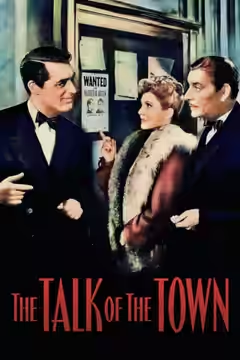
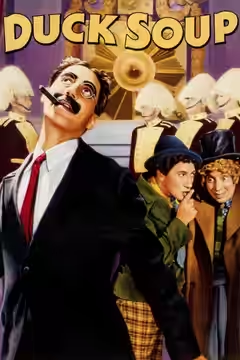
We have reviewed two of the films. In Duck Soup (1933), which we rate highly, he is the Sylvanian Agitator, a small part in Leo McCarey's fast, rude satire, and the film's speed suits him; his physical and verbal comedy was made for rooms where everyone is already shouting. In The Talk of the Town (1942) he is Jan Pulaski, and we will be honest: our review does not mention him, and when we went back to check we found he had left almost no trace on us. That is the character actor's lot, and it is also the fair criticism of his career. He was cast for the accent and the arm-waving, in what Hollywood called ethnic parts, the manner earned him the nickname the Mad Russian, and nobody offered him a straight dramatic role of any size.
What works is the body. The mime training shows, and it is why his eccentric professors and waiters were the turns people remembered, his Professor Quintana in Howard Hawks's Ball of Fire (1941) among them. He also had a talent for playing types beyond Russians, which is more than most accent actors of the period managed, though the contexts stayed light. If you want to see him at his best, start with Casablanca and Ball of Fire and treat Duck Soup as the bonus.
He was a friend of Humphrey Bogart, and in 1990 he told the Los Angeles Times: "When Humphrey Bogart first came to Hollywood, I predicted he'd never make it because he was short, homely and lisped. What do I know?" A good deal about being the second man at the bar, as it turns out, and nothing at all about who ends up owning it.
Biography
Leonid Kinskey was a Russian-born American actor. He was born on 18 April 1903 in St Petersburg, Russia, and fled the country after the revolution. He worked on stage in Europe and South America before arriving in the United States, where he made his film debut in Trouble in Paradise (1932).
Kinskey appeared in supporting roles in numerous films, including as the Sylvanian agitator in Duck Soup (1933) and as Sascha in Casablanca (1942). He also worked in television from the 1950s into the 1970s, with guest appearances in series such as Hogan's Heroes. He died on 8 September 1998 in Fountain Hills, Arizona.