Leslie Howard played Englishmen who seemed to be thinking about something else, and made that look like strength. Give him a secret to keep and he was quietly remarkable; give him only good manners, as in Gone with the Wind, and there was not much left.
Fi1m perspective
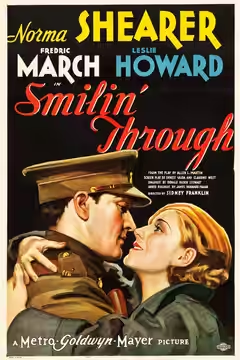
In Smilin' Through (1932) Sir John Carteret walks out to a grave every evening and talks to it, and Leslie Howard plays it as the most reasonable thing a man could do with his evenings. He drops his voice to the level of someone speaking to a person in the next room, and the film around him, which is old-fashioned and knows exactly where your tear ducts are, does not need to push. We came braced to be patient and left moved, and it was that voice that did it. Howard underplayed so far that you leaned in to meet him.
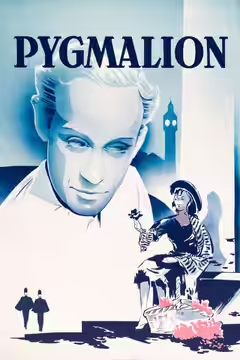
He came to films late, after a bank clerk's desk, the First World War and Broadway success in the 1920s; his sound debut in Outward Bound (1930) made him a Hollywood leading man. The Thirties parts run together as one long civilised Englishman: Philip Carey opposite Bette Davis in Of Human Bondage (1934), Sir Percy Blakeney in The Scarlet Pimpernel (1934), Alan Squier in The Petrified Forest (1936). Then Henry Higgins in Pygmalion (1938), which he also co-directed with Anthony Asquith; then Gone with the Wind (1939) for David O. Selznick; then home to Britain when the war began, where he directed and played R.J. Mitchell in The First of the Few (1942), one of his last films.
The persona worked when there was something behind it. The Scarlet Pimpernel is built on a fop who is secretly a hero, and Howard makes the fop convincing before the hero arrives. Sir John in Smilin' Through is a man of leisure whose leisure is grief. In both the manners are a cover, and Howard could suggest what was under them with almost nothing, a pause, a look held half a second past comfort. Lee Garmes, shooting Smilin' Through, lit the garden from behind the roses, so that Howard's face is half in dusk and you watch it to find out what he is not saying.
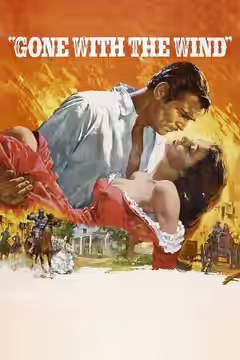
Ashley Wilkes is the counter-example. Sidney Howard's screenplay gives Scarlett everything and leaves the people around her waiting for her next bout of unhappiness, and Ashley has no secret to keep, only decency. Beside Gable, who is comfortable with the film's extravagance, Howard looks like a man who has wandered in from a quieter picture and is too polite to ask where he is. "I hate the damn part. I’m not nearly beautiful or young enough for Ashley, and it makes me sick being fixed up to look attractive," he wrote, and for once an actor's complaint about his most famous role is also a fair review of it.
The pity is that the part everyone remembers is the one that shows him least. Start instead with Smilin' Through, which asks little beyond forty minutes of patience, and listen to what he does with his voice. Then try Pygmalion, where the civilised Englishman is finally allowed to be rude to everyone he meets.
Biography
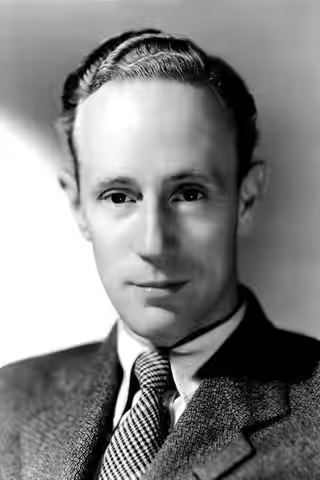
Leslie Howard, born Leslie Howard Steiner, was an English actor, director and producer. He was born on 3 April 1893 in Forest Hill, London, and died on 1 June 1943. After working as a bank clerk, he served in the First World War and began his stage career in 1917, later appearing on Broadway.
Howard became one of the leading film actors of the 1930s, often portraying the quintessential Englishman. His notable roles include Philip Carey in Of Human Bondage (1934), Sir Percy Blakeney in The Scarlet Pimpernel (1934), Alan Squier in The Petrified Forest (1936), Henry Higgins in Pygmalion (1938, which he also co-directed), Holger Brandt in Intermezzo: A Love Story (1939) and Ashley Wilkes in Gone with the Wind (1939). He received Academy Award nominations for Best Actor for Berkeley Square (1933) and Pygmalion.
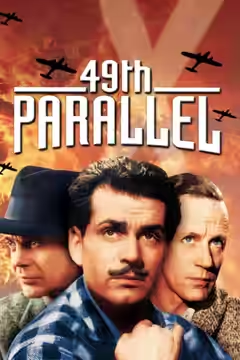
During the Second World War, Howard returned to Britain and appeared in propaganda films including 49th Parallel (1941) and The First of the Few (1942, which he also directed). He was killed when the aircraft on which he was a passenger was shot down by the Luftwaffe over the Atlantic.