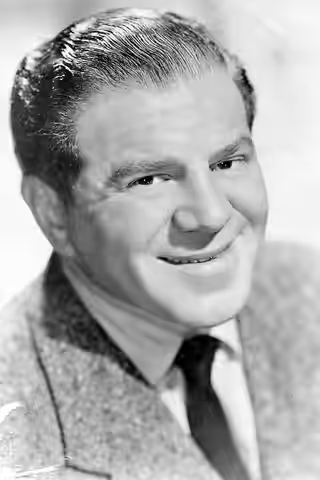
Lionel Stander had a voice like a bag of gravel and knew not to overuse it. He was a supporting actor for the better part of sixty years, and in the right comedy he is the reason the middle third survives.
Fi1m perspective
Lionel Stander opens his mouth and everyone else in the scene seems to shrink. The voice is the first thing and, for most of his employers, the only thing: a low rasp coming out of a heavy man with heavy brows who looks as though he has already decided you are lying. Directors hired that. What the good ones also got was timing, the sense of when to hold the growl back so that the blunt line, when it came, landed on a laugh rather than a flinch.
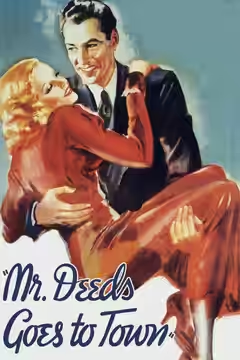
Mr. Deeds Goes to Town (1936) is where most people will meet him, as Cornelius Cobb, the cynical press agent attached to Gary Cooper's suddenly rich Deeds. We scored the film 82 and said the middle sags while Robert Riskin's script repeats its one joke about New York; we also said Stander's gravel helps it through, and we stand by that. We found ourselves waiting for him. Whenever the script starts to preach, he says something sour and the picture remembers it is a comedy. It is a small part and he does not try to make it bigger, which is the point.
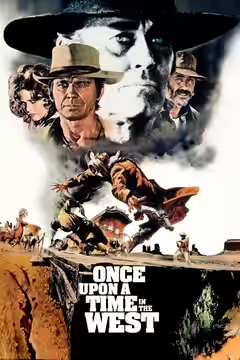
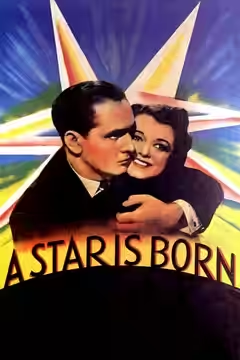
He had come to Columbia in 1935 from Broadway and radio, and the 1930s gave him the parts he was built for: the cynic, the henchman, the man with an accent and an angle. A Star Is Born (1937) cast him as Matt Libby, a studio publicist with no kindness in him at all. Then the work stopped. The blacklist kept him out of Hollywood from the late 1940s until the mid-1960s, and when he surfaced again it was in Europe: a rare lead in Roman Polanski's Cul-de-sac (1966), then an innkeeper in Sergio Leone's Once Upon a Time in the West (1968), in the middle of a run of Italian westerns. He came home for Martin Scorsese's New York, New York (1977) and then for Hart to Hart (1979), where five years as Max the chauffeur made him more widely known than any of his films had.
The limits are plain. He was a supporting actor for the whole of his career, and even after the television years he was mostly asked to be Lionel Stander: the growl, the glare, the blunt line. A script that wanted only the growl got only the growl. The strength is the same thing seen from the other side. Put him among people who talk too much, as Capra did, and the bluntness becomes a relief. He is the man at the party who says what everyone is thinking, and nobody argues with him.
Start with Mr. Deeds, where he is doing exactly one thing and doing it well. Then, if you want to see what twenty lost years did to the face, find Cul-de-sac. He was past seventy before Hart to Hart made him a household name, and the voice was exactly where he had left it.
Biography
Lionel Stander was an American actor whose career in theatre, film, radio and television spanned nearly seven decades. Born in the Bronx, New York City, on 11 January 1908, he made his stage debut at the age of 19 and appeared in his first film short in 1933. His distinctive raspy voice and gravelly delivery suited him to roles as tough or cynical characters.
Stander appeared in films including Mr. Deeds Goes to Town (1936), A Star Is Born (1937) and Cul-de-Sac (1966). He was blacklisted in Hollywood during the 1950s after testimony before the House Un-American Activities Committee and worked for a time in Europe, including as the Innkeeper in Once Upon a Time in the West (1968). Later credits included New York, New York (1977), 1941 (1979) and the television series Hart to Hart (1979–84), in which he played Max. He died in Los Angeles on 30 November 1994.