Lisa McGee writes people who are blunt, foolish and fond of each other, and she refuses to let any of them be cool. Derry Girls is as good a British sitcom as we have seen in years; the trouble starts whenever she asks a plot to carry the company.
Fi1m perspective
Soldiers search the school bus, and the girls on it are worried about whether one of them has got off with a boy. That is Lisa McGee's habit in a single scene. The large thing outside the window is a nuisance and the small thing in the seat is the story. Her people are rude, panicky and fond of each other, and never glamorous. "I never want to write 'cool' characters," she has said. "Most of us are just dicks and that is what we respond to on TV."
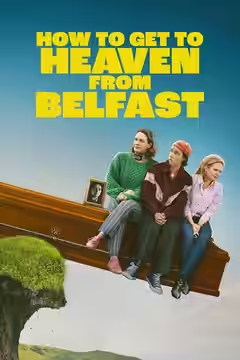
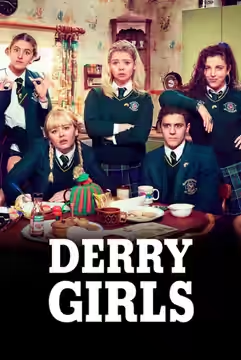
She began with plays at Queen's University Belfast, and Jump (2003), a dark comedy set in Derry, later became a film. A decade writing for other people's series followed. Derry Girls (2018) changed that. She created it and wrote every episode herself across three series, taking a Catholic girls' school, a town with checkpoints and a family who treat a bomb on the bridge as a timetabling problem, and making it fast and filthy. Along the way she co-wrote the thriller The Deceived (2020) with Tobias Beer. How to Get to Heaven from Belfast (2026), her first big series since, sends three lifelong friends after a suspicious death.
What works is the talk. McGee's Northern Irish humour depends on people saying what they think without anyone doubting that they love each other. Michael Lennox directed Derry Girls at speed, and McGee filled each twenty-three minutes so tightly that we kept missing a line because we were still laughing at the one before. Then the first series ended and caught us out. We had laughed for six episodes at a family who find the Troubles an inconvenience, and in a couple of minutes she made us look at every one of those jokes again. In Belfast, the flashbacks to the friendship at different ages moved us more than we expected, because they show growing older need not mean growing sensible.
What does not work is the machinery. Derry Girls ran on one engine: Michelle has a plan, Clare has a fit, it goes wrong, and everyone ends up in Sister Michael's office. It is a good engine, and by the third series you can hear it turning over. Belfast has the opposite problem, a mystery with two timelines and comic detours that keep getting in one another's way, so the women end up serving a joke when they were already funny. McGee writes alone and has spoken about the pressure of following Derry Girls. The plotting is where one pair of hands shows.
In Derry Girls the plot was the least interesting thing on screen, and that was on purpose. In Belfast it happened by accident. Start with the school bus; go on to the three friends for the company rather than the case. Whatever she writes next, we hope the mystery is allowed to be a nuisance too.
Biography
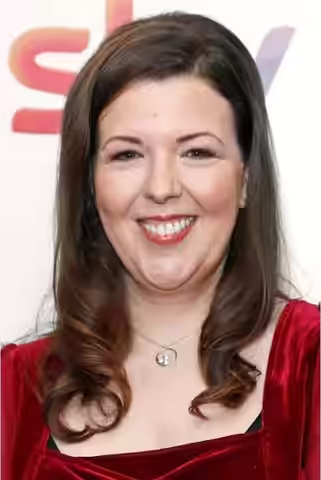
Lisa McGee is a Northern Irish screenwriter and playwright. She was born in August 1980 in Derry, Northern Ireland, and studied drama at Queen's University Belfast. She was Writer on Attachment at the National Theatre in 2006.
McGee created and wrote the Channel 4 comedy series Derry Girls (2018–2022), for which she received BAFTA awards including Best Scripted Comedy and Best Writer: Comedy. Other credits include episodes of The White Queen (2013), Indian Summers (2015), and Being Human (2009–2012), as well as co-creating the 2020 mini-series The Deceived with her husband Tobias Beer.
She wrote and created the Netflix series How to Get to Heaven from Belfast (2026).