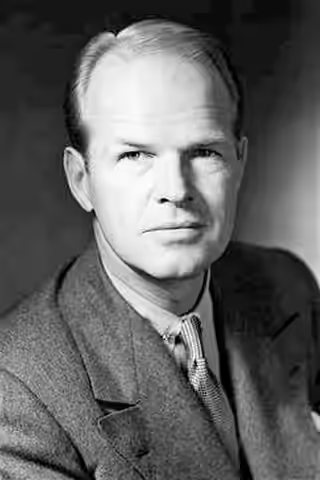
Louis Jean Heydt spent his Hollywood years playing the man who loses: the timid clerk, the blackmailer out of his depth, the soldier nobody would put on a poster. He did it quietly and well, and the films were better for having him in the corner.
Fi1m perspective
There is a kind of man in American films of the thirties and forties who walks into a room already knowing how the scene will end for him. He talks a little too fast, in a voice with some nose in it, and he is not quite as frightened as he ought to be, because he has been here before. That was Louis Jean Heydt's trade for a quarter of a century, and he was good at it. He was cast, over and over, as the hapless one, the fall guy, the average Joe down on his luck, and he never made the mistake of asking for our sympathy. He let us decide.
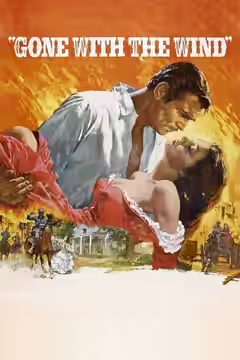
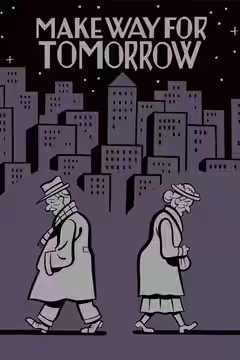
He came to acting late and sideways. He was a journalist at the New York World before he went on stage in 1927, and he did not reach Hollywood until the mid-1930s. Once there he barely stopped: more than a hundred films through 1959, and early television besides. An early credit is a doctor in Leo McCarey's Make Way for Tomorrow (1937); by 1939 he was a hungry soldier holding a child in Gone with the Wind, one of several small, visible parts in very large productions. Preston Sturges used him twice, most memorably as Tommy Thompson, the failed bank clerk who frames The Great McGinty (1940). John Ford put him among the PT-boat crew of They Were Expendable (1945) as an older soldier called Ohio, and he is one of the faces you remember from that crowded deck.
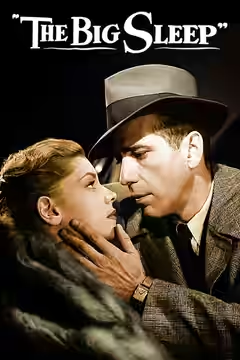
The part we can send you to is Joe Brody in The Big Sleep (1946), a blackmailer who has got hold of something he does not know how to handle and finds himself across a room from Bogart. Heydt plays him with the relaxed sarcasm that ran through most of his work, a man cracking wise because it is cheaper than admitting he is scared. We felt sorry for Brody, which is not what a blackmailer is for, and it is Heydt's nasal, unhurried delivery that does it: he sounds like someone who has already worked out he is the least important person in the scene. That is his gift. He gave the leads something to be sharper than, and he never took the light off them while he did it.
His limits were the limits of the job. He was rarely dark; the menace in a Heydt character was always slightly borrowed. In Test Pilot (1938) he is Greg Benson, one of the men on the ground, and like everyone else on the ground he is quietly outplayed by Spencer Tracy saying almost nothing. The face was known to anyone who went to the pictures in those years. The name was not, and it never quite became so.
He went back to the stage and worked there until 1960. If you want to see what a good supporting actor did in the studio years, put The Big Sleep on and, for once, watch the man who is not Bogart.
Biography
Louis Jean Heydt (also credited as Louis J. Heydt) was an American character actor in film, television and theatre. Born in Montclair, New Jersey, he was educated at Worcester Academy and Dartmouth College. He initially worked as a journalist for the New York World before turning to acting, appearing on the New York stage from the late 1920s.
Heydt moved to Hollywood in the mid-1930s and appeared in more than 100 films. He is credited in Gone with the Wind (1939), Make Way for Tomorrow (1937), They Were Expendable (1945) and as Joe Brody in The Big Sleep (1946). He continued working in films, television and on stage into the 1950s.
Heydt died of a heart attack on 29 January 1960 in Boston, Massachusetts, shortly after appearing in the first scene of a pre-Broadway try-out of the play There Was a Little Girl.