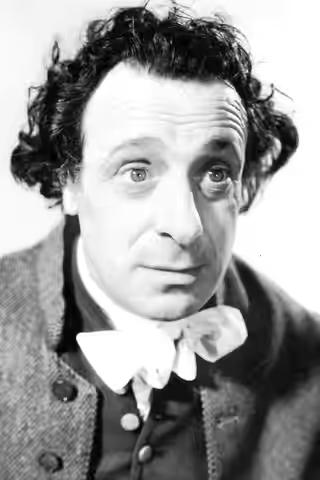
A Barcelona stage actor whom Hollywood spent a quarter of a century casting as the excitable Italian behind the hotel desk or in the kitchen. He was good at it, and the pity is how seldom anyone asked him for anything else.
Fi1m perspective
You know him before he speaks. A small man in a waiter's jacket or a proprietor's suit, hands already moving, English about to come apart under the strain of whatever has just gone wrong in his establishment. Luis Alberni played that man in more than 150 films, and the trick, which is harder than it looks, was to make the same panic feel new each time the camera found him.
He came to it late and from somewhere else. Alberni had done European stock theatre before he reached New York in 1912, and he spent the years from 1915 to 1928 on Broadway, including the original What Price Glory?, while picking up silent film work on the side. Sound changed everything, because sound gave him an accent, and casting directors heard it and never heard anything else. Svengali (1931), opposite John Barrymore, settled him in Hollywood; The Count of Monte Cristo (1934) gave him Jacopo; and from then on he was the flustered chef, the fussing servant, the hotel owner losing his grip, all the way to an uncredited old man in The Ten Commandments (1956).
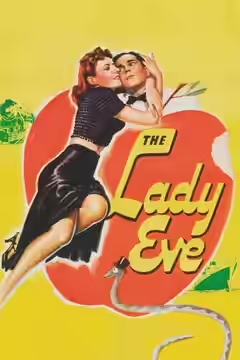
The best of it is in the Preston Sturges scripts. Easy Living (1937) has him as Mr Louis Louis, a hotelier whose composure is a thin coat of paint, and The Lady Eve (1941) puts him in charge of the Pike kitchen as Emile. Sturges wrote fast, cross-purpose talk, and Alberni's garbled, headlong delivery was built for it. We have not reviewed those films here, so we will not judge them at length, but they are where his reputation rests, and rightly.
The one performance we have written about is Giovanni in One Night of Love (1934), a comic opera-world servant fussing around Grace Moore. It is a stock part and he knew it. What struck us, watching, was how little he coasted: every entrance had a fresh small emergency attached to it, a thing to be carried or a person to be placated, so that a character with nothing to do always seemed to have too much. We laughed, and then noticed that the laugh was his and not the script's. That is the whole of his craft and it is not a small one.
The criticism, made in his own lifetime, is that a man with that stage grounding was kept in dialect parts and never allowed to show what else he had. A Bell for Adano (1945) suggested there was warmth and gravity available when a director wanted them. Few did. If you meet him in a comedy, watch the hands, not the accent; the accent was what he was hired for, and the hands are where he did the work.
Biography
Luis Alberni was a Spanish-born American character actor who appeared in films from the silent era through the 1950s. Born in Barcelona, he studied acting and emigrated to the United States in 1912. He began his career on the New York stage, appearing in more than a dozen Broadway productions between 1915 and 1928, including the original run of What Price Glory? (1924–1925). His first screen role came in the 1915 film Children of the Ghetto.
In sound films he was frequently cast in supporting roles, often as excitable foreigners. Notable credits include Jacopo in The Count of Monte Cristo (1934), Mr Louis Louis in Easy Living (1937), the King of Naples in That Hamilton Woman (1941), Pike's chef Emile in The Lady Eve (1941), and the mayor in A Bell for Adano (1945). He also appeared in The Ten Commandments (1956). Alberni died in California in 1962.