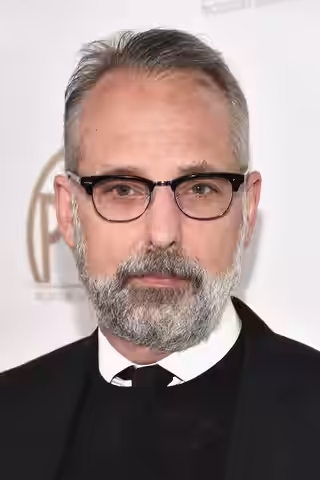
Marc Smerling gets people to talk who should not, and then trusts the footage. Across two decades of true crime with Andrew Jarecki his best work is patient and built from the subjects' own material; the series format keeps tempting him to dress it up.
Fi1m perspective
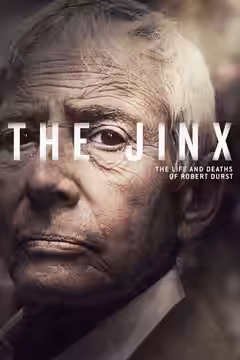
Robert Durst sits in a dark room with nothing behind him but his own face. Marc Smerling and David Paul Jacobson shot him close for The Jinx (2015), and Durst talks, about a body in Galveston in 2001, in a flat and reasonable voice. That is the Smerling method in one picture: get the subject in the chair, keep the light low and let the tape run. The held seconds after each answer are where the series lives, and we found ourselves leaning forward through every one of them.
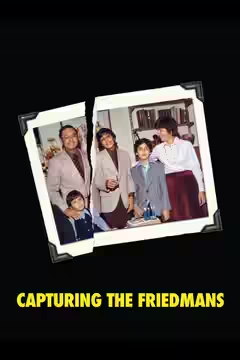
He came up the long way, as an associate producer on NBC documentaries for Tom Brokaw in the late 1980s, then with a company of his own making commercials and music videos, then in the partnership with Andrew Jarecki that has produced most of what he is known for. Capturing the Friedmans (2003), which he produced, set the pattern: a well-known case revisited, built from the family's own tapes, even-handed on the surface and unwilling to settle what the courts had not. It remains the best thing with his name on it. He produced Catfish (2010) the same year he wrote All Good Things (2010), a scripted feature about Durst, and that detour led, five years later, back to the man himself.
The Jinx is the work that made his reputation and the one that shows the cost of the series form. Six episodes need filling, and the filling here is slow-motion reenactment and a score that swells when the material is already doing the job. By the last two episodes the makers are on screen, on the telephone and in the edit suite, and the programme has become about their chase. It grips. It is also a change of subject, and the question of when what they found went to the police and when it went into the cut has never quite left the series. We admit that by episode four we were enjoying Durst's company, his dryness, his odd timing, and then he would mention a saw and we would remember what we were laughing at. That lurch is engineered, and Smerling engineers it well.
He has said of his sources, "You tell them the truth. I think people are always sort of startled when you are honest with them." The honesty is real; so is the bargain. Since The Jinx he has directed A Wilderness of Error (2020), re-examining the Jeffrey MacDonald case with Errol Morris, and moved into podcasts with Crimetown and Crooked City, where there are no reenactments to shoot. Start with Capturing the Friedmans, then The Jinx, and notice that he is at his best when somebody else's tape is running and nobody has been asked to walk through a doorway in slow motion.
Biography
Marc Smerling is an American film producer, writer, cinematographer and director. He is a graduate of Syracuse University’s Newhouse School of Journalism and holds a Master’s degree in film production from the University of Southern California.
Smerling produced the documentary Capturing the Friedmans (2003), which was nominated for an Academy Award for Best Documentary Feature. He co-wrote and produced the narrative feature All Good Things (2010) and produced the documentary Catfish (2010). He served as producer, writer, cinematographer and creator on the HBO series The Jinx (2015), for which he received an Emmy Award as producer and a nomination for cinematography. He directed the FX docuseries A Wilderness of Error (2020).