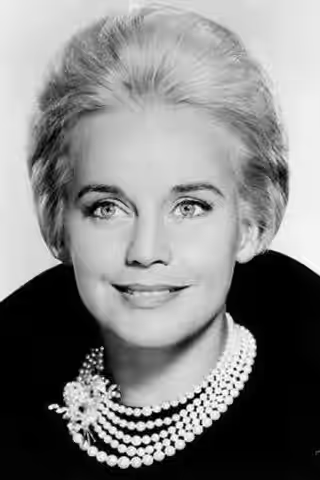
Maria Schell cried for a living, and for a decade European cinema could not get enough of it. The feeling was real and the technique behind it showed; she was at her best when a script made her hold the tears back.
Fi1m perspective
Watch Maria Schell's face when the news is bad. It fills slowly, the chin goes, and the tears come as though she had fought them and lost. She did this in film after film through the 1950s, in The Last Bridge (1954), Gervaise (1956) and Rose Bernd (1957), usually as a woman wronged in an adaptation of a serious book. Oskar Werner called her Seelchen, little soul, and the name followed her about.
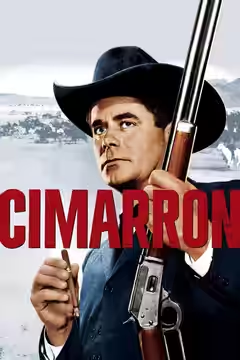
She began small, with a part in the Swiss film Steibruch in 1942, and was leading films from 1948, starting with The Angel with the Trumpet. The 1950s made her: Zola for René Clément in Gervaise, Dostoevsky for Visconti in Le notti bianche (1957), and Dostoevsky again as Grushenka in The Brothers Karamazov (1958), her first Hollywood film. Hollywood then put her on horseback, opposite Gary Cooper in The Hanging Tree (1959) and opposite Glenn Ford in Anthony Mann's Cimarron (1960). After that the parts got smaller and the credits more scattered: character work in European and American productions into the 1980s, including a short appearance as Vond-Ah in Superman (1978), and stage and television into the 1990s.
The tears were the selling point and they were also the problem. Nobody doubted she felt it, but you could see the machinery, the pause before the eyes went, and a sweetness laid on afterwards to make the suffering easier to sit through. One Life (1958) is the one where the sweetness thickens most. By the early 1960s audiences had watched her be let down by enough men to feel they had the measure of her, and the roles had not moved on.
Which is why Cimarron, not a good film, is the one we would point you to first. Sabra Cravat is the wife who stays in Osage while Ford's Yancey keeps leaving, and Schulman's script asks her mainly to stand in doorways and be disappointed. Schell gives her more steel than the writing offers. When she takes over a task Yancey has abandoned, her face does not soften, and we liked her for it: a woman famous for weeping getting through a scene dry-eyed and being better for it. The film around her is long, civil and goes round in circles, but she is not the reason.
Asked in 1960 about preparing a Ninotchka role, she said: "There are two ways of saying the words. You can say the line as if it is funny or you can make it sound profound so that the audience thinks it is right for this woman to say such a thing." That is a technician talking, and she was one. Start with the 1950s films, where the reputation was made, and go in knowing the tears are on their way. Then watch her in Osage, holding them back.
Biography
Maria Schell (born Maria Margarethe Anna Schell) was an Austrian-Swiss actress. She was born in Vienna on 15 January 1926 and died in Preitenegg, Carinthia, on 26 April 2005.
She trained at the School of Theatrical Arts in Zurich and began her career in Swiss and German films in the 1940s. Schell became a leading star of German cinema in the 1950s, appearing in The Last Bridge (1954), for which she won the Cannes Best Actress Award, and Gervaise (1956), for which she received the Volpi Cup for Best Actress at the Venice Film Festival.
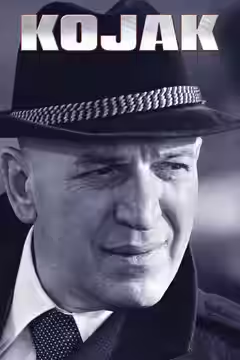
Her later credits include White Nights (1957), The Hanging Tree (1959), Cimarron (1960), The Odessa File (1974), Voyage of the Damned (1976), Superman (1978) as Vond-Ah, and a guest role in Kojak (1976). She was the older sister of actor Maximilian Schell and also performed on stage in Zurich, Vienna, Berlin and at the Salzburg Festival.