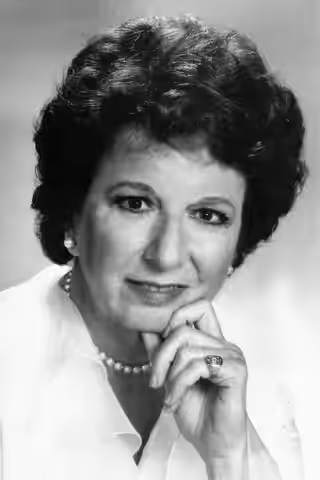
Mary Wickes gave nurses, housekeepers and nuns a dry comic authority, often with only a few lines. We admire her precision, though The Hunchback of Notre Dame shows how poorly a film can use it.
Fi1m perspective
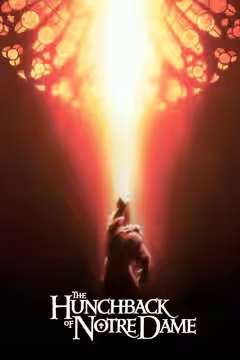
In The Hunchback of Notre Dame (1996), Mary Wickes supplies the voice of Laverne, one of the stone companions who come alive when Quasimodo is alone. She joins Charles Kimbrough and Jason Alexander in a comic trio that keeps interrupting a serious film. We sighed when the wisecracking interrupted the drama; the film had earned our attention without it. Wickes was an effective comic supporting actor, but her final role is a poor introduction to what made her useful.
Her usual characters had work to do. Nurses, housekeepers, secretaries and nuns gave her a reason to be brisk when others fell short. Her tall, angular appearance helped the physical comedy, but the deadpan delivery mattered more. She was particularly useful in small parts, where a sharply timed remark had to establish a character quickly. We admire that skill, even if repeated casting as the sour, efficient woman left too little room for anything else.
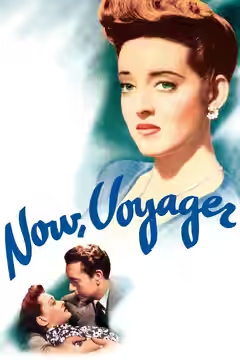
The pattern was established with Nurse Preen in The Man Who Came to Dinner, first on stage in 1939 and then on film in 1942. She also played Nurse Dora Pickford alongside Bette Davis in Now, Voyager (1942), while White Christmas (1954) gave her the housekeeper Emma Allen. These parts made good use of her comic timing without requiring much screen time. The repeated casting also explains why her briskness could become predictable.
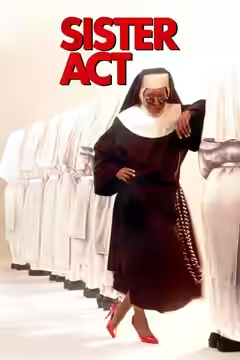
The later return to prominence did not require a new comic manner. After Sister Clarissa in The Trouble with Angels (1966), she played Sister Mary Lazarus in Sister Act (1992) and its 1993 sequel, with Whoopi Goldberg. She took the etiquette of playing nuns seriously, preparing details that a broad comic performance might have neglected. She also played Aunt March in Little Women (1994).
Trousdale and Wise's The Hunchback of Notre Dame gives her a less helpful job: reminding us that a dark story is still a children's film. The gargoyles also get some of Menken's weakest songs here, making the cast work harder at comic relief the film does not need. The screenplay repeatedly sends them in just when the drama has become absorbing. For an introduction to Wickes, start with Sister Act.
Biography
Mary Wickes (born Mary Isabella Wickenhauser) was an American character actress who worked in film, television and theatre from the 1930s to the 1990s. She frequently played supporting roles as prim, professional women such as secretaries, nurses, nuns and housekeepers.
Born in St. Louis, Missouri, on 13 June 1910, she graduated from Washington University in St. Louis with a degree in political science before turning to acting. Her Broadway debut came in 1934 in The Farmer Takes a Wife. She appeared in films including White Christmas (1954) and One Hundred and One Dalmatians (1961), and on television in series such as MAS*H and Murder, She Wrote.
Later roles included Sister Mary Lazarus in Sister Act (1992) and its 1993 sequel, Aunt March in Little Women (1994), and the voice of Gargoyle Laverne in The Hunchback of Notre Dame (1996), released after her death. Wickes died on 22 October 1995 in Los Angeles following complications from surgery.