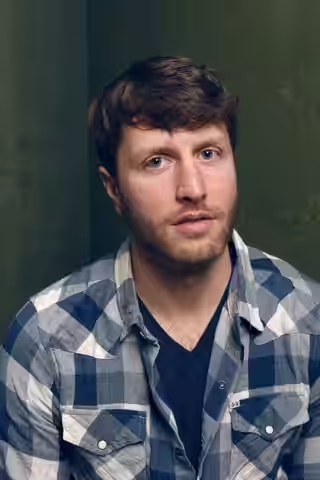
Matthew Heineman gets his camera to places most documentary makers only describe, and lets the footage do the arguing. It is thrilling, honest work; it is also work that would sometimes be improved by stopping to ask a question.
Fi1m perspective
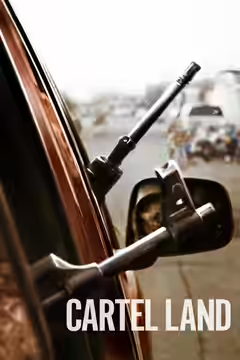
The camera drops behind a car door. Rounds crack off the walls of a Michoacán street, the frame swings, and it finds a face. That is the moment in Cartel Land (2015) that told us what Matthew Heineman is for. He was holding the camera himself, sharing the job with Matt Porwoll, and nobody in the shot knew how the afternoon would end. We were frightened, more than in any staged gunfight we can remember, because there was no blocking to reassure us. Most documentary makers arrive after the shooting and film the bullet holes. Heineman films the bullets.
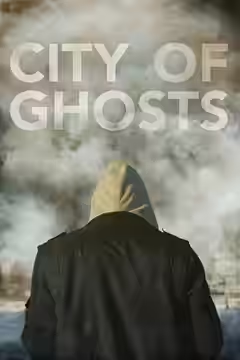
He came to it by way of a history degree from Dartmouth and a spell at HBO, then Escape Fire (2012), co-directed with Susan Froemke, a film about American healthcare and the start of the approach he has used since. Cartel Land made his name. Since then the subjects have kept their stakes: Syrian citizen journalists in City of Ghosts (2017), the war correspondent Marie Colvin in A Private War (2018), his first fiction feature, and the musician Jon Batiste in American Symphony (2023). We have not reviewed those and will not judge them here. The method reported for them is the one we saw in Cartel Land: no crew or a small one, a person to embed with, and a story allowed to change under him.
What works is the access and the nerve. He has Dr José Manuel Mireles Valverde in a town square telling people to arm themselves, at a patient's bedside, and at home with a wife who has stopped arguing, and he is close enough for all three. He does not narrate and does not bring on experts. The cutting, with Bradley J. Ross, Pax Wassermann and Matthew Hamachek, keeps us oriented even when the footage is running for cover. Heineman has said: "I don’t consider myself an adrenaline junkie. I don’t enjoy being shot at. And I don’t feel the need to be in a conflict zone. But what I do enjoy is telling stories where the stakes are really high." We believe him. Nothing in the footage looks like showing off.
What does not work is his reluctance to interrupt. Cartel Land runs 101 minutes and moves fast, and it rarely stops to ask Mireles who chooses whom to hood, or what happens to the men driven away in trucks. The footage raises those questions. The film does not stay for the answers. Letting events speak is a fine principle, and events are not always articulate; some have found the same in City of Ghosts, where the wider context stays implicit.
Start with Cartel Land, and watch it with someone who will argue about what the Autodefensas were owed, because Heineman has decided that argument is yours to have.
Biography
Matthew Heineman is an American documentary filmmaker, director, producer, cinematographer and editor. He graduated from Dartmouth College in 2005, where he studied history, and founded the New York-based production company Our Time Projects in 2009.
He is best known for Cartel Land (2015), on which he served as director, editor, cinematographer and producer. The film received an Academy Award nomination for Best Documentary Feature, a BAFTA nomination and three Primetime Emmy Awards. His other notable works include City of Ghosts (2017), A Private War (2018), The Boy from Medellín (2020) and American Symphony (2023).