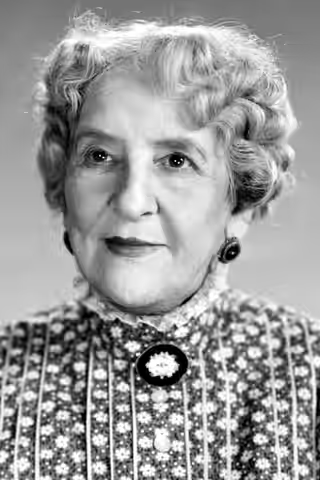
May Robson spent the 1930s being cast as the grandmother with the sharp tongue, and did it well enough that nobody asked for more. Lady for a Day asked, once, and found a stillness the character parts never left room for.
Fi1m perspective
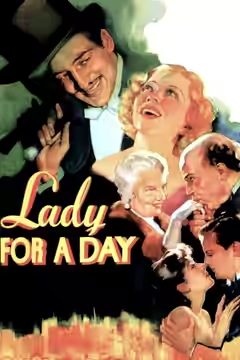
Start with a woman in front of a mirror. In Lady for a Day (1933), Apple Annie, a drunk who sells apples on the street, has been scrubbed and dressed by Missouri Martin's girls and left alone in a borrowed gown. Robson does not smile at her reflection. She looks at it as though she had met the woman once, years ago, and been rude to her. Frank Capra holds the shot and lets the face do everything, and we came away quietly upset, which we had not expected from a Depression fairy tale about an apple seller passed off as a lady.
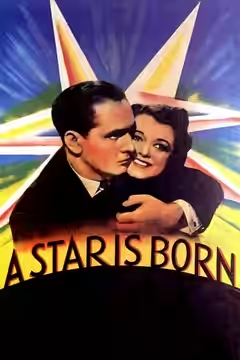
That stillness was a late discovery, or a late permission. Robson had been on the New York stage since 1883, a Broadway character actress who also ran her own touring company, and she turned up in the odd silent from the 1900s onward. She did not move to Hollywood until 1927, and the studios knew at once what to do with her: the domineering matron, the crusty grandmother, the old woman who says the thing nobody else at the table will. Dinner at Eight (1933), Anna Karenina (1935) and A Star Is Born (1937) each gave her a version of it. She was seventy-five when Capra gave her the lead.
What works is the temper. She plays Annie as a drunk with a short fuse rather than a saint, and she keeps the fuse when the furs go on. Robert Kalloch's gowns fit her perfectly and she wears them as if they might bite. Joseph Walker lights her tenement room in hard shadow and the borrowed flat in a soft glow, so the lie is better lit than the truth, and Robson is the one thing in the film that weighs the same in both. It is a modest picture whose second half dawdles with reporters and policemen; she is why you sit through it.
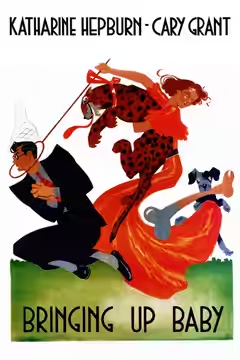
The limit is the one her casting set. In Bringing Up Baby (1938), Howard Hawks's farce moves so fast that Aunt Elizabeth is chiefly another obstacle in Cary Grant's way, and Robson does exactly what the part needs and nothing it does not. It is a fine film and an ordinary use of her. Most of her sound work is like that: reliable, sharp, in and out in a few minutes. The usual reservation is that Hollywood typecast her as the older woman. The fairer complaint is that it rarely let the older woman be quiet.
"I want to keep working right up until the final curtain," she said, and she did, until 1942. Capra remade Lady for a Day in 1961 as Pocketful of Miracles, at greater length and to less effect, which is a fair measure of what she brought to the first one. See that first. Then watch Bringing Up Baby and try to catch her before the film has moved on.
Biography
May Robson, born Mary Jeanette Robison, was an Australian-born actress whose career spanned stage and screen from 1883 until her death in 1942. She began acting on Broadway and in touring productions after being widowed, and appeared in a small number of silent films before returning to the screen in the late 1920s.
She is known for numerous supporting roles in 1930s Hollywood films, including Apple Annie in Lady for a Day (1933), for which she received an Academy Award nomination for Best Actress; Lettie Blodgett in A Star Is Born (1937); Countess Vronsky in Anna Karenina (1935); and Aunt Elizabeth in Bringing Up Baby (1938). Other credits include Dinner at Eight (1933), Alice in Wonderland (1933) and Wife vs. Secretary (1936). Robson was also credited as a writer on at least one stage play.