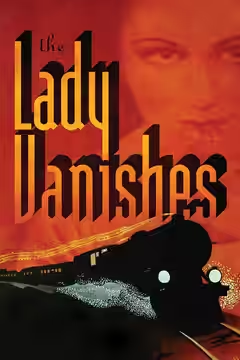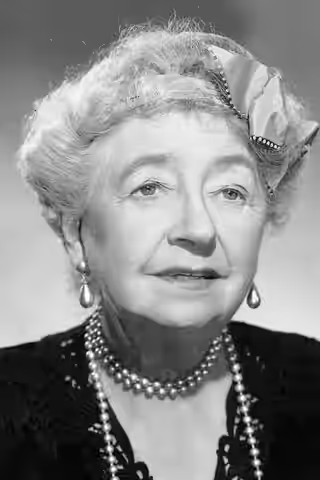
A stage actress who arrived in Hollywood at seventy-two and spent her last decade playing formidable old women, kindly or otherwise. Her Miss Froy in The Lady Vanishes is the reason anyone still asks who she was, and it is reason enough.
Fi1m perspective
Miss Froy is a small, pleasant, elderly Englishwoman on a Balkan express, and the whole of Hitchcock's The Lady Vanishes (1938) rests on the fact that once she is gone, nobody but Iris Henderson will admit she was ever there. That is May Whitty's gift, and the film knows it: she is so easy to overlook that Hitchcock can use her as the thing everyone has overlooked. Short, upright and quite certain of herself, she is cosy first and sharp a moment later, and the picture needs both. We missed her once she had left the carriage, which is exactly what it wants us to do, and the search that follows only works because we do.
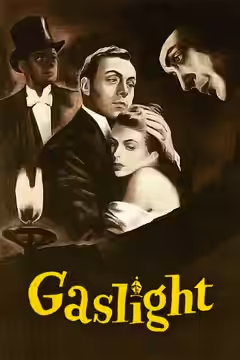
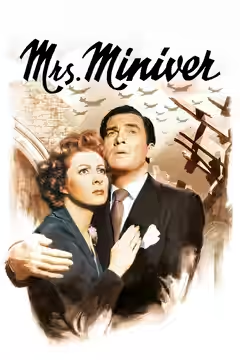
She had been on the stage since 1881, when she made her debut in Liverpool, and in London from the following year, and she spent a long career as a leading actress in the West End while appearing in only a few early British silents. Cinema found her late. Her first Hollywood film, Night Must Fall (1937), had her recreate a part she had already played on Broadway, and she was seventy-two when she made it. From then until her death in 1948 she worked steadily in supporting roles: two films for Hitchcock, The Lady Vanishes and Suspicion (1941); Lady Beldon in Mrs. Miniver (1942); Miss Thwaites in Gaslight (1944).
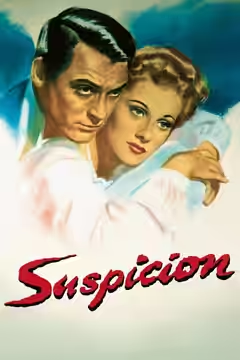
The parts were nearly all the same part. She was cast as old women of standing, high-born or merely strong-minded, imperious or crotchety on the surface and usually warm underneath, and the honest caveat is that she was seldom asked to be anything else. What she brought to them was authority. She plays these women as people who have been obeyed for sixty years and see no reason to stop, and that is why a film can hand her a few minutes and trust her to be remembered. In Suspicion she and Cedric Hardwicke are Lina's parents in a handful of scenes, and it is the General's remark, overheard through a window, that sends the daughter out of the house and into the marriage, not anything of hers. The part gives her little, and she does what can be done with little, which is to look like someone who runs the household whether or not the script has noticed.
Start with The Lady Vanishes, where the small part is the whole plot and she is precisely as memorable as the title requires. Suspicion is worth your evening, but not for her. She once said of her long run, "I've got everything Betty Grable has ... only I've had it longer." On the evidence of the last ten years of it, she was not exaggerating.
Biography
May Whitty was an English stage and film actress. Born Mary Louise Whitty in Liverpool, she made her stage debut in 1881 and became a leading West End performer. She was created a Dame Commander of the Order of the British Empire in 1918, one of the first two women entertainers to receive the honour, for her wartime services. The actors' union Equity was founded in her home in 1930.
Whitty appeared in a small number of British silent films from 1914. She made her Hollywood debut at the age of 72, recreating her stage role as Mrs Bramson in Night Must Fall (1937). She remained in the United States from 1939, playing supporting roles in films including The Lady Vanishes (1938) as Miss Froy, Suspicion (1941), Mrs Miniver (1942) as Lady Beldon, Lassie Come Home (1943), Gaslight (1944) and My Name Is Julia Ross (1945). She received Academy Award nominations for Night Must Fall and Mrs Miniver. She died in Beverly Hills, California, in 1948.