Michael Almereyda takes old plays and dead inventors and hands them a toy camera, a bank of monitors and a corporation to run. The films are small, clever and uneven, and Hamlet (2000) is still the one to start with.
Fi1m perspective
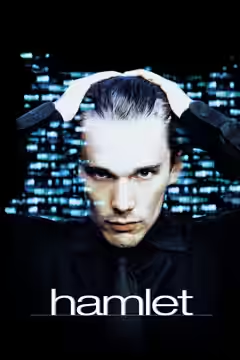
The ghost in Michael Almereyda’s Hamlet (2000) arrives over the closed-circuit cameras. The prince carries a toy camera and talks to it more readily than to people; Polonius wires Ophelia for sound; Claudius watches his nephew on monitors. Almereyda noticed that the play was already about being watched and gave the watchers the equipment. That is his habit in a sentence: take an old text or a dead inventor, put them in the present, and see what the present’s machines do to them.
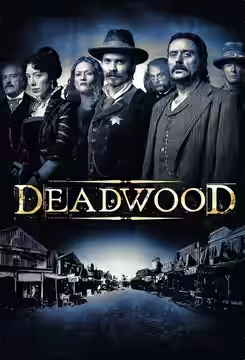
He was at it long before anyone was looking. After leaving Harvard three years into an art-history degree he wrote screenplays for other people and made films on his own money, among them Twister (1989), a comedy about a Kansas family that does not get on, and Nadja (1995), a vampire picture shot partly on Pixelvision, the toy video camera, which is presumably where the prince found his. Hamlet is the one people have seen. Since then he has moved between Shakespeare (Cymbeline, 2014), inventors and psychologists (Experimenter, 2015, in which Stanley Milgram addresses the camera; Tesla, 2020, with Ethan Hawke again) and Marjorie Prime (2017), on memory and artificial intelligence, with one hour of Deadwood in 2005. Hawke has made three films with him, the actor Karl Geary three, the cinematographer John de Borman two.
What works is the thinking. The play within the play in Hamlet becomes a short film the prince edits from old tapes and screens for the family, the cleverest thing in the picture and, oddly, one of the most faithful. We expected a stunt and were caught by it: a boy trying to say something to his mother in the only language he has, which is cutting. Almereyda writes conversations in which people answer questions nobody asked, and they tell you more about the speakers than a straight exchange would.
What does not work is the centre. His Hamlet runs 112 minutes, and the cutting is brisk enough that the prince barely has time to think, which matters for that prince more than most. Hawke plays him so withdrawn that the play’s engine seems to be running in another room, and a film built at a mutter cannot afford a lead who mutters too. We have not reviewed the later portraits, but the risk is built into the method: formal play is cheaper than feeling, and a film that keeps interrupting itself can forget to let anyone in.
Most of his films have been seen by few people, partly a matter of distribution and partly of temperament. He has said, “I don’t know how to fake it, to do something I don’t believe in,” and the films look like it, for better and worse. Start with Hamlet, worth an evening for the cameras, the hotel and Bill Murray’s Polonius. Our review of Deadwood does not mention him at all, and for the director of one episode of somebody else’s series that is more or less the job done.
Biography
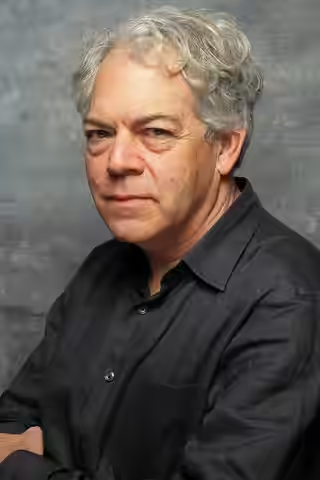
Michael Almereyda is an American film director, screenwriter and producer. Born on 7 April 1959 in Overland Park, Kansas, he studied art history at Harvard University before dropping out after three years to pursue filmmaking.
His feature films include Hamlet (2000), Experimenter (2015), Marjorie Prime (2017) and Tesla (2020). He also directed an episode of the HBO series Deadwood (2005). Marjorie Prime won the Sloan Feature Film Prize at Sundance, and William Eggleston in the Real World (2005) received a Gotham Award nomination for best documentary.
Almereyda's younger sister is the actress Spencer Kayden. He lives in New York City.