Mike Mazurki makes a threat feel heavy, slow and difficult to escape. We value the stubborn intensity of his screen brutes, and the deadpan humour that keeps the familiar casting from becoming entirely predictable.
Fi1m perspective
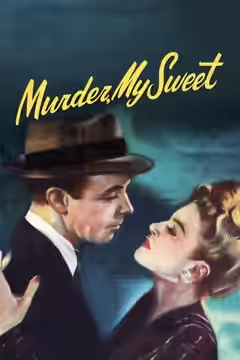
Mike Mazurki's croaking voice and lumbering movement make Moose Malloy in Murder, My Sweet (1944) unsettling before there is much to explain. His size matters, but so does the sense that this man cannot be distracted from what he wants. We were unnerved by Malloy because Mazurki makes his obsession seem too stubborn for clever talk to shift. There is little subtlety in the character, yet the actor's insistence makes it hard to dismiss him as merely another screen brute.
Edward Dmytryk gets particularly good use from him here, setting that determination against Dick Powell's impertinence. The film's dialogue is more dependable than its plotting, and the performances help us through the slow stretches. Mazurki contributes by keeping Malloy's dangerous fixation clear even when the surrounding story grows less easy to follow; we always have a reason to worry about this man. It was his breakthrough role, and it gives the familiar casting a purpose: his physical presence tells us how much trouble an obsession like this might cause.
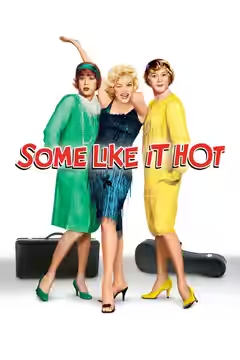
Too many other parts reduced him to the size, the face and the voice. Cast repeatedly as thugs and strong-arm men, he was useful to films that did not necessarily ask much of him. Splitface in Dick Tracy (1945) belongs to that run of villains, while the Strangler in Night and the City (1950) gave his professional wrestling experience a more specific use. Its gruelling wrestling match depends on skill as well as bulk. Billy Wilder's Some Like It Hot (1959), with Mazurki as Spats' henchman, made room for the deadpan comedy that his imposing appearance could also serve.
Later supporting appearances included the miner in It's a Mad, Mad, Mad, Mad World (1963), before Challenge to Be Free (1975) offered a rare lead as a wilderness trapper. Those opportunities did not undo a career's worth of narrow casting. We value him most when a film gives that intimidating presence something definite to do, rather than assuming his arrival will be enough. Start with Murder, My Sweet, and do not mistake Malloy's slowness for a reason to relax.
Biography
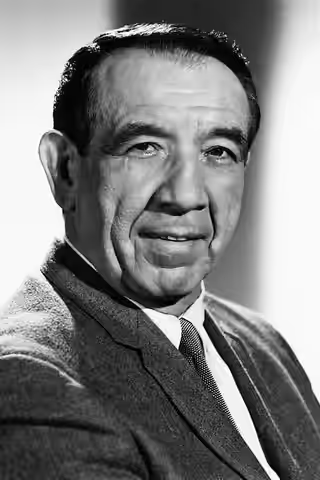
Mike Mazurki was a Ukrainian-American actor and professional wrestler. Born Markiian Yulianovych Mazurkevych on 25 December 1907 in Kupczyńce near Tarnopol, Galicia, Austria-Hungary (now Ukraine), he emigrated to the United States, attended LaSalle Institute and graduated from Manhattan College in 1930 before studying law at Fordham University. He worked as a professional wrestler and football player before entering acting.
Mazurki was discovered by Josef von Sternberg and made his screen debut in The Shanghai Gesture (1941). He appeared in dozens of films, often cast as tough guys, thugs and gangsters, with roles including Moose Malloy in Murder, My Sweet (1944), the Strangler in Night and the City (1950), and Spats' Henchman in Some Like It Hot (1959). His television credits include appearances in Batman (1966), Bonanza (1959), I Dream of Jeannie (1965), It's a Mad, Mad, Mad, Mad World (1963) and The Munsters (1964).
He founded and served as the first president of the Cauliflower Alley Club from 1965 until his death on 9 December 1990 in Glendale, California.