Miriam Colon made stern mothers and community elders feel like people entitled to be heard. We value the dignity she brought to such parts, while wishing the films had more often let her be something else.
Fi1m perspective
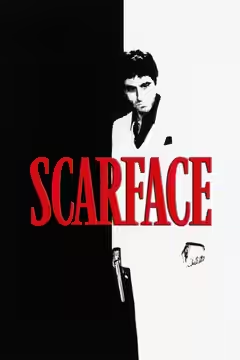
In Scarface (1983), Miriam Colon plays a mother who is prepared to stand up to Tony Montana. As Mama Montana, she gives that disapproval enough conviction to matter beside Al Pacino's ferocious performance. We felt relieved by her defiance, because someone in Brian De Palma's film was refusing to be impressed by its criminal protagonist. The film sometimes insists on what we have already understood, but Colon's sternness has a purpose: family does not oblige her character to approve of wrongdoing.
Her early film and television work often confined her to one-dimensional ethnic supporting parts. That history makes us wary of treating the familiar maternal roles as evidence of everything she could do. Later work continued to favour grandmothers and matriarchs; we would have liked more parts that asked something other than authority of her.
Lone Star (1996) gives her a more complicated place in the story as Mercedes Cruz, a Tejana restaurateur in John Sayles's Texas border town. Questions of identity and family give the character more to negotiate than a simple distinction between good and bad behaviour. Sayles's patient ensemble drama is the stronger of the two films, though its connections can become too neat, and Colon belongs comfortably among people whose histories matter to their present conduct. There is more for her to work with here than the question of whether a mother will tolerate her son's behaviour.
The later Bless Me, Ultima (2013) offers a useful contrast, giving her the lead as Ultima, a New Mexican healer, in an adaptation of Rudolfo Anaya's novel. That leading role is a welcome exception to the supporting mothers and grandmothers that recur in her screen work. For a first encounter, we recommend Lone Star, with Scarface for the sharper, narrower use of her sternness. Pacino need not have all the attention.