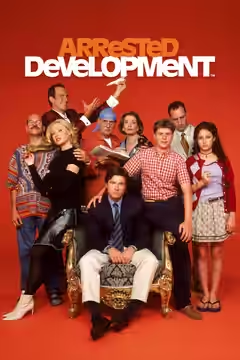
Hurwitz writes comedy the way other people build clocks: a line dropped in one episode chimes in another, and nobody on screen hears it. On Arrested Development that made a family sitcom we still recommend; since then the mechanism has too often run ahead of the laughs.
Fi1m perspective
A Mitchell Hurwitz joke rarely finishes in the scene where it starts. Something is said in passing, at a table or in a car, and episodes later it comes round again, with the speaker none the wiser that they are repeating themselves. Arrested Development (2003) runs on this. The Bluths have lost their money and moved into a model home; the scenes change sixty or more times an episode; there is no laugh track to tell you where the jokes are; and Ron Howard's narration keeps a straight face through all of it. The family cannot behave, and Hurwitz and his writers, Jim Vallely chief among them, treat that as the plot rather than the premise.
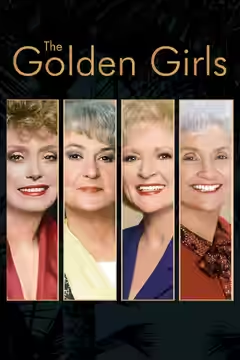
He learned the trade the old way, on multi-camera sitcoms in the late 1980s and early 1990s: Nurses, The John Larroquette Show and The Golden Girls, where he was a story editor and writer. We rate The Golden Girls highly, but the credit belongs to Susan Harris and her four actors; what Hurwitz took from it was the discipline of the joke. Two creator credits followed that did not last, Everything's Relative (1999) and The Ellen Show (2001), before Howard picked him to develop Arrested Development. It ran three seasons, was cancelled in 2006, and returned in 2013 for a fourth and in 2018 for a fifth. In between and afterwards he co-created Running Wilde (2010) with Will Arnett, Flaked (2016) and Lady Dynamite (2016), none of which caught on as the Bluths did.
What works is the density. A Hurwitz script has more jokes per minute than most, and the good ones reward a second viewing because you catch what was planted. What does not work is that he is fonder of the machinery than of the people it moves. In the later seasons of Arrested Development the callbacks multiply and the storylines cross until the arranging becomes the point, and a character who was surprising in 2004 is doing the same thing, on cue, a decade on. There are episodes in the fourth season where we sat admiring how the pieces fitted and did not laugh once, and we were cross about it, because that cast had earned better.
The pattern since has been the same: an ambitious structure, a good ensemble, and a show that ends before it settles. Sit Down, Shut Up (2009) came and went. Lady Dynamite, made with more freedom, has the meta habits without the Bluths' cruelty to anchor them.
Hurwitz has said that "Writers need restrictions." The first three seasons of Arrested Development, made for a network that eventually cancelled him, are the best thing he has done. The two that came after a seven-year gap are the ones we would trim. Start at the beginning, watch a few at a time so the callbacks have room to land, and stop when you notice the joke arriving before you do.
Biography
Mitchell Hurwitz is an American television writer, producer and actor. Born on 29 May 1963 in Anaheim, California, he graduated from Georgetown University. He began his career writing for sitcoms including The Golden Girls in the early 1990s.
Hurwitz created the sitcom Arrested Development (2003–2006, revived 2013 and 2018–2019), on which he also served as writer, executive producer and co-director of the fourth season. The series won multiple Primetime Emmy Awards, including for Outstanding Comedy Series and writing. He co-created The Ellen Show and has developed other pilots and series such as Running Wilde and Lady Dynamite.