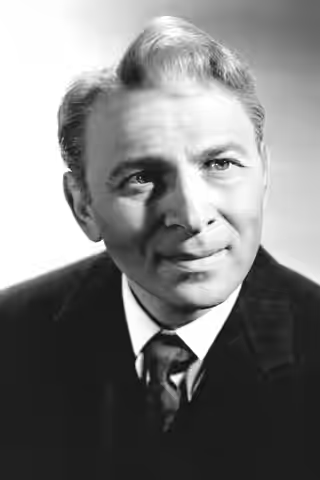
Morris Carnovsky brings a thoughtful authority to supporting roles, with an expressive voice and precise physical detail. The films offer a narrower view of his abilities than his stage work does.
Fi1m perspective
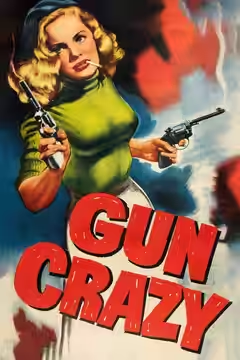
A judge need not be forbidding: Morris Carnovsky’s kindly Judge Willoughby in Gun Crazy (1950) is a useful introduction to his screen presence. His dignity makes him a convincing choice for authority, without requiring that authority to be cruel. We rate him as an ensemble actor who makes a small part worth attending to. Joseph H. Lewis’s gripping crime romance belongs chiefly to Peggy Cummins and John Dall, with a camera placed uncomfortably close.
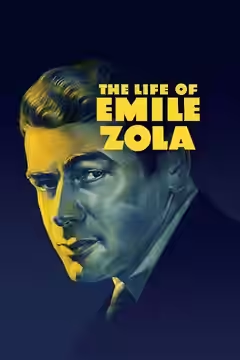
In The Life of Emile Zola (1937), he plays Anatole France within another carefully chosen ensemble. Dieterle’s courtroom drama is solidly built and often stirring, but the writing gives us a firm reason to qualify that praise. We were frustrated by its failure to name the anti-Semitism behind the Dreyfus affair, which it treats chiefly as a security matter. Carnovsky supplies a learned man’s dignity; the film still leaves too much unsaid about what its characters are standing against.
He preferred stage work for the time it allowed him to develop a character, which helps explain why the films offer only a partial introduction. A co-founder of the Group Theatre in 1931, he worked closely with Clifford Odets, who wrote roles with him in mind. His role as the father in the stage production of Golden Boy (1937) made use of silent grief, not just vocal presence. His screen dignity could also serve less agreeable men. In Dead Reckoning (1947), he played Martinelli, an antagonist opposite Humphrey Bogart.
The later turn towards Shakespeare gave him larger parts, with John Houseman bringing him to the American Shakespeare Festival in 1956. Shylock in The Merchant of Venice (1957) and the title role in King Lear (1963) put his naturalistic stage technique to classical use. Sidney Lumet’s A View from the Bridge (1962), with Carnovsky as Mr Alfieri, also brought him back to film. Those credits caution against measuring the actor by the number of scenes Hollywood gave him. Start with Gun Crazy for the film, then pay attention to the judge.
Biography
Morris Carnovsky was an American stage and film actor. He studied at Washington University in St. Louis and began his career in Yiddish theatre before moving to New York, where he joined the Theatre Guild and helped found the Group Theatre in 1931.
He appeared in numerous Broadway productions and made his film debut as Anatole France in The Life of Emile Zola (1937). Carnovsky featured in films including Edge of Darkness (1943), Dead Reckoning (1947), Thieves' Highway (1949), Gun Crazy (1950) and Cyrano de Bergerac (1950). He was blacklisted in the 1950s after refusing to testify before the House Un-American Activities Committee.
Later in his career Carnovsky returned to the stage, performing Shakespearean roles at the American Shakespeare Festival. He appeared in A View from the Bridge (1962) and The Gambler (1974), and was inducted into the Theatre Hall of Fame in 1979. Carnovsky died in 1992.