Moses Gunn conveys power through a measured delivery and a resonant voice with a little rasp. We value the precision of his supporting work, while wishing the parts more often asked him to be something other than authoritative.
Fi1m perspective
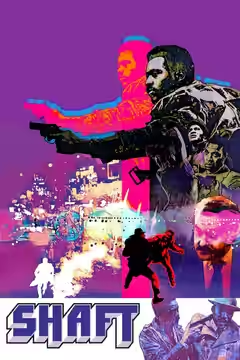
The voice is resonant, slightly rough, and seldom seems to be hurrying towards the end of a line. In Shaft (1971), Moses Gunn makes Bumpy Jonas, a Harlem crime boss, sound accustomed to being heard. Gordon Parks has a persuasive leading man in Richard Roundtree; Gunn supplies a different, more settled authority. It is supporting work we rate for its restraint, in a film whose pleasures are more reliable than its plot.
We enjoyed the steadiness Gunn brings to Shaft, because his measured delivery gives Bumpy weight without turning every line into a threat. That slightly rasping voice does some of the work, but the precision matters as much: the dignity is there even in a gangster. Parks does not need another leading man, and Gunn makes the supporting part count without treating it as the centre of the film. The thin plotting remains thin; a good actor cannot be expected to repair it.
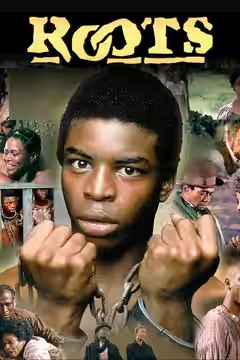
His Shakespearean work helps explain that care with speech, though the delivery remains understated. From the late 1960s, film and television gave him supporting parts across markedly different kinds of story. Kintango, the leader presiding over manhood rites in Roots (1977), and Booker T. Washington in Miloš Forman's Ragtime (1981) both draw on his capacity for authority. Joe Kagan, the boxer-turned-farmer of Little House on the Prairie (1977–1981), allows for a more everyday sort of dignity.
The reservation is how often authority is all the screen parts ask him to supply. Despite his prominent stage work, cinema rarely gave him parts substantial enough to test those abilities fully. Being immediately credible as someone important is useful, but it can leave an actor doing the same job in different costumes, with too little opportunity to explore uncertainty or weakness. Start with Shaft for the pleasure of a precise supporting performance, rather than a full account of what Gunn could do.
Biography
Moses Gunn (1929–1993) was an American actor of stage and screen. He co-founded the Negro Ensemble Company and made his off-Broadway debut in 1962 in Jean Genet’s The Blacks. He won Obie Awards for performances including Aaron in Titus Andronicus (1968) and was nominated for a Tony Award for Best Actor in a Play for The Poison Tree (1976). He played Othello on Broadway in 1970.
Gunn is known for film roles such as Bumpy Jonas in Shaft (1971) and its 1972 sequel, Booker T. Washington in Ragtime (1981), which brought him an NAACP Image Award, and Cairon in The NeverEnding Story (1984). On television he played Joe Kagan in Little House on the Prairie (1977–1981) and Kintango in the miniseries Roots (1977), for which he received an Emmy nomination.