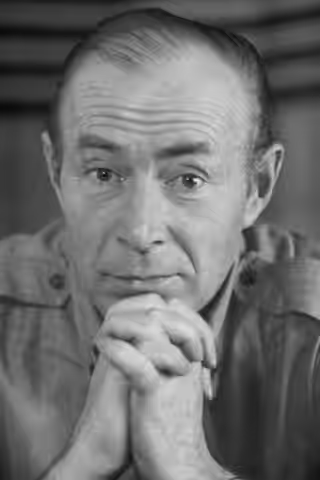
Mykola Hrynko brings quiet authority to supporting parts, and we value his restraint. Tarkovsky gives that quality room to work, though even Hrynko cannot always make the philosophical dialogue sound like something a person needs to say.
Fi1m perspective
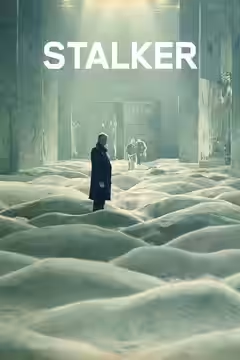
In Stalker (1979), Mykola Hrynko's Professor has the quiet authority of someone we are prepared to listen to. Hrynko's restrained manner matters before any philosophical point has been settled: he gives us a person to take seriously. His expressive silence is part of the appeal, particularly in supporting roles that might otherwise serve chiefly to keep a discussion going. We value that ability to make a secondary figure feel substantial without demanding that every scene belong to him.
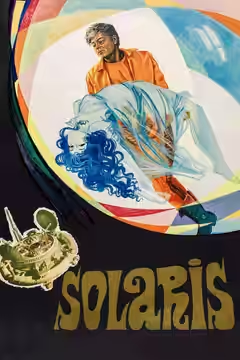
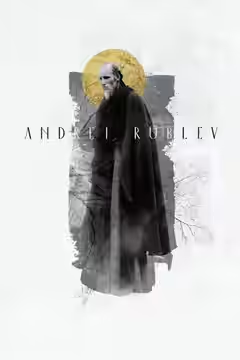
The Tarkovsky collaboration begins with Ivan's Childhood (1962) and takes in Andrei Rublev (1966), Solaris (1972) and Mirror (1975) before Stalker. Across those five films, Hrynko becomes a familiar choice for contemplative supporting figures. As Kelvin's father in Solaris, he also provides a family connection in a film that makes space travel painfully lonely. We find its grief worth the patience it asks, although the philosophical exchanges can explain what the performances have already made clear. Quiet acting is particularly welcome in such company.
Stalker makes the difficulty sharper by putting the Professor alongside Anatoly Solonitsyn's Writer in sustained debate. We felt our attention drift when the two kept pressing points we had already understood. The writing sometimes supplies a topic without making either man's need to pursue it sufficiently clear. Hrynko brings dignity to the part, but the restraint we admire can only do so much when a conversation stops sounding necessary. Our caveat concerns the dialogue; it is no reason to dismiss the performance or the film.
Tarkovsky is the clearest route through this work, but not its whole extent. Hrynko also worked with Sergei Parajanov on Shadows of Forgotten Ancestors (1965), and appeared in the children's film The Adventures of Buratino (1976). Those credits are worth remembering before treating him solely as a solemn man in a Tarkovsky landscape. We are most interested in the actor who can suggest thought without announcing its importance. Start with Solaris; leave Stalker for an evening when nobody needs the conversation to move quickly.
Biography
Mykola Hrynko, also credited as Nikolai Grinko or Mykola Hryhorovych Hrynko, was a Soviet Ukrainian actor. He was born on 22 May 1920 in Kherson and died on 10 April 1989 in Kyiv.
He began his career in theatre before moving to cinema in the early 1960s. Hrynko appeared in numerous Soviet films and is particularly associated with the work of Andrei Tarkovsky, playing roles in Ivan's Childhood (1962), Andrei Rublev (1966), Solaris (1972), Mirror (1975) and Stalker (1979). He also appeared in Sergei Parajanov's Shadows of Forgotten Ancestors (1965), as well as War and Peace (1968), Afonya (1975), The Adventures of Buratino (1976) and The Adventures of the Electronic (1980).