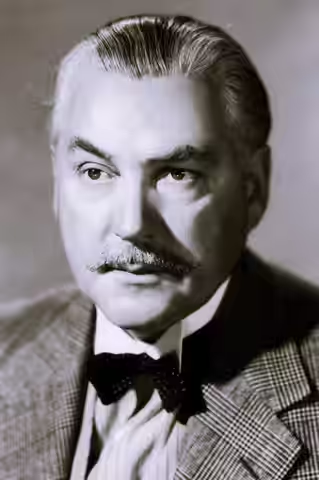
Nigel Bruce spent twenty years playing the amiable Englishman who does not quite follow, and did it so well that people forgot there was any choice involved. Hitchcock saw that the softness could be made to frighten us, and twice it did.
Fi1m perspective
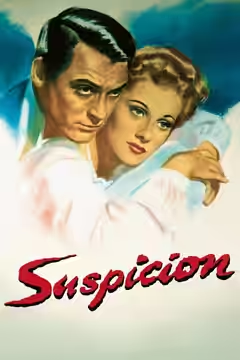
Watch him listen. In Suspicion (1941), Beaky Thwaite sits across from Cary Grant and takes every word as gospel, all "old bean" and helpless affection, his face lit up with the pleasure of being let in on the plan. Bruce's habit, and it was a habit, was to play a man half a beat behind the conversation and perfectly content to stay there. Other actors played fools as if the part embarrassed them. Bruce played them as if fools were happy.
He came to it late and sideways. Army service, then a London stage debut in 1920, then Broadway from 1926, including Noël Coward and Springtime for Henry. Hollywood took him in 1934 and kept him busy: 78 films, most of them as bumbling aristocrats, fuzzy military men and drawing-room uncles, a fixture of the British colony that filled the supporting casts of the period. Born in Ensenada, Mexico, as it happens, though nothing on screen would tell you so.
The part that fixed him was Dr Watson, opposite Basil Rathbone, from The Hound of the Baskervilles (1939) through fourteen films to 1946, with a radio series alongside. Rathbone's Holmes is all edges; Bruce is the upholstery. Purists have complained from the start that Conan Doyle's Watson was a soldier and a doctor and a man of some sense, and that Bruce's was none of these. They have a point. They also underrate how much a series about a man who is never wrong needs someone in the frame who is, and how hard it is to be that man without becoming tiresome.
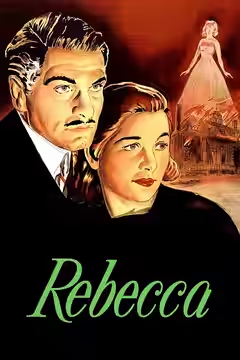
Hitchcock used him twice, and the second time he used him properly. In Rebecca (1940) Giles Lacy is a well-fed brother-in-law with nothing on his mind, there to fill a dinner table and make Manderley feel lived in. In Suspicion the same qualities are put to work. Beaky is the one person who takes Johnnie's schemes at face value, and the warmth of the film lives in him. We found we were more frightened for Beaky than for Lina, because he would never see anything coming, and that fear is entirely Bruce's making: he never lets a flicker of doubt cross the face, not once, so the audience has to carry the doubt for him.
After the Holmes films ended he went on in character parts, among them Chaplin's Limelight (1952), until his death in 1953. Start with Suspicion, where the innocence has a job to do. Then try a Holmes and decide for yourself whether the Watson is a liberty taken with a good book or the reason anyone sat through fourteen of them.
Biography
Nigel Bruce was a British character actor. He played Major Giles Lacy in Alfred Hitchcock's Rebecca (1940) and appeared as Gordon Cochrane 'Beaky' Thwaite in Suspicion (1941).
He was best known for portraying Dr John H. Watson opposite Basil Rathbone as Sherlock Holmes in fourteen films beginning with The Hound of the Baskervilles (1939) and The Adventures of Sherlock Holmes (1939), and in the radio series The New Adventures of Sherlock Holmes. Other credits include Lassie Come Home (1943) and Limelight (1952).
Born in Ensenada, Baja California, Mexico, to British parents, Bruce was educated in England. He began acting on stage after serving in the First World War and worked in films from the 1930s until his death.