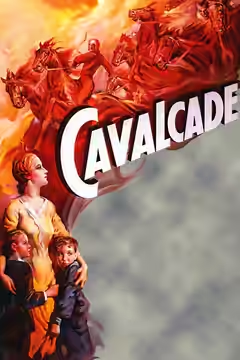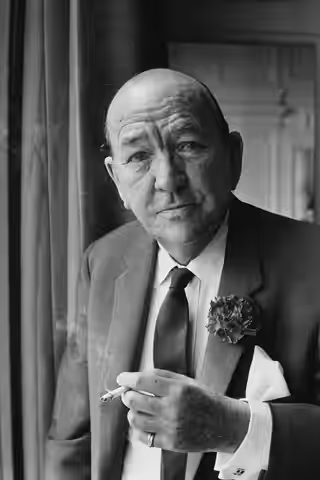
Noël Coward's people say less than they feel. With something under it, as in Brief Encounter, that restraint makes a film we would send a stranger to see; with nothing under it, as in Cavalcade, it is only good manners.
Fi1m perspective
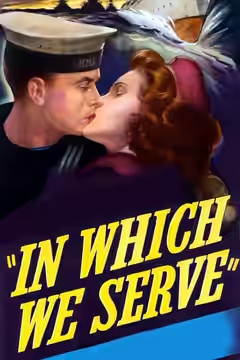
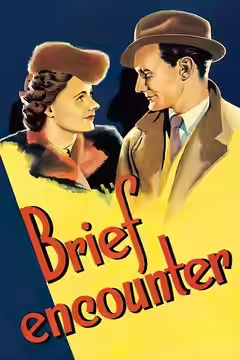
A Coward character in trouble does not raise their voice. In Brief Encounter (1945) two married people fall in love and neither of them stops respecting the life they already have; the pain is in what cannot be said across a station buffet table. In In Which We Serve (1942) his own Captain Kinross tells a new crew he wants a happy ship and an efficient ship, never once lifting his voice, and the quiet does what shouting would not. Celia Johnson, as his wife, toasts the ship at Christmas as the other woman in her marriage, and the joke stops being one somewhere in the middle. It moved us more than we expected, because nobody at the table quite knows where to look.
He came to the cinema late and from the stage. A child actor first, he broke through as a playwright with The Vortex (1924), and Hay Fever (1925), Private Lives (1930) and Blithe Spirit (1941) are still revived because the talk is quick and the later acts quicker. The films that matter came in the war, both with David Lean: In Which We Serve, which Coward wrote, produced, scored, co-directed and starred in, and Brief Encounter, which he only wrote, from his one-act play Still Life. The one with less of him in front of the camera is the better film.
What goes wrong is the speech. Coward likes one, and he does not much like an argument. In Which We Serve has the discipline to run 115 minutes without wasting many of them, so the habit is bearable. In Cavalcade (1933), Frank Lloyd's film of his stage pageant, it is fatal: every public calamity from 1899 to 1933 passes in front of one family's window, Robert Marryot says what England stands for, and nobody in the room is allowed to answer him. The servants are loved so long as they know their place. It is polite about everything, including death.
Brief Encounter is the same instinct pointed the right way. The restraint belongs to Laura, and Celia Johnson gives her anxiety enough weight that we feel what keeping quiet costs her. Our one reservation is Alec, who is less fully drawn, so that Trevor Howard has to fall back on plain decency where Johnson can suggest a whole inner life. Coward knew the woman better than the man.
He once said, "I think on the whole I am a better writer than I am given credit for being." On the evidence of these three films he was right, and he was also the one standing in the way. Start with Brief Encounter; watch In Which We Serve for the toast; keep Cavalcade for a wet afternoon when you want to see what the same good manners look like with nothing underneath.
Biography
Noël Coward was an English playwright, composer, director, actor and writer. He wrote the screenplay for and produced the 1945 film Brief Encounter, directed by David Lean and adapted from his one-act play Still Life.
Coward wrote more than fifty plays, many of which remain in the theatre repertoire, including Hay Fever, Private Lives, Design for Living, Present Laughter and Blithe Spirit. His other notable screen credits include the screenplay for Cavalcade (1933) and writing and directing In Which We Serve (1942). He was knighted in 1970.