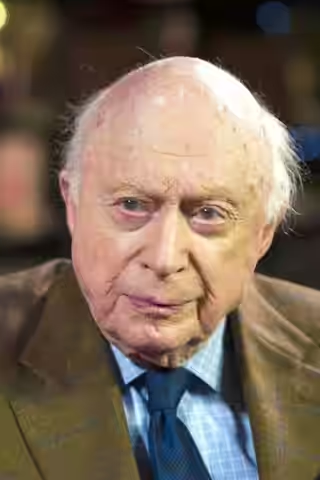
Norman Lloyd spent eighty years playing men in charge, a saboteur first, headmasters and hospital chiefs later, and gave them a quiet courtesy that made them harder to dismiss than their scripts intended. Small parts, mostly, and better for it.
Fi1m perspective
Watch Mr Nolan, the headmaster in Dead Poets Society (1989), whenever a boy is talking. Norman Lloyd does not raise his voice, does not lean in and does not pretend to be sorry. He lets the boy finish, and the pause that follows does more than any speech Peter Weir could have written for him. Lloyd played men who run things for most of a long career, and his habit was to play them from the inside, as people who believe they are right, rather than as obstacles for the hero to get round.
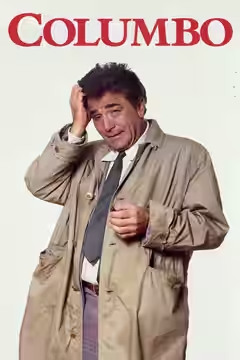
The career has three parts. He came out of 1930s New York theatre, first with Eva Le Gallienne and then with Orson Welles and John Houseman at the Mercury Theatre, and Hitchcock put him on film in Saboteur (1942) as Frank Fry, the saboteur of the title, in a picture remembered for its sequence on the Statue of Liberty. Villains were his early trade. There was a small part in Spellbound (1945) as Mr Garmes and work for Chaplin in Limelight (1952), and then film parts thinned out in the 1950s. He went behind the camera instead, producing and directing television, including Alfred Hitchcock Presents, and later directing on Columbo; his association with Hitchcock ran close to four decades.
The third part began in his late sixties. Daniel Auschlander in St Elsewhere (1982–88) was planned for a few episodes and lasted six seasons, and it is the performance to start with. Our review put him alongside William Daniels and Ed Begley Jr as the reason to keep following a staff who are often hard to like, and that is right. Somewhere in the long middle of the run we found we were fonder of Auschlander than of anyone else in the building, and Lloyd had done nothing to ask for it: no softening, no speeches about how hard the job is, only a man who has been in charge for a long time and is tired in a way he never mentions. After that came Nolan, then Letterblair in Martin Scorsese's The Age of Innocence (1993), and he kept working past a hundred.
The limits are the limits of the parts. Nobody built a film around him, and when a script wants authority to be simply the enemy, as Dead Poets Society does, Lloyd plays it straight and cannot save the film from its tidiness; his Nolan is more carefully thought through than the scheme he serves. Hitchcock used him sparingly and to the point, which is why the early parts stick and also why there is so little of them.
"Hitch changed my life," he said in 2015, and the work agrees with him. See St Elsewhere, where he has the time to build a man, then go back to Saboteur, where he has much less and needs no more.
Biography
Norman Lloyd was an American actor, producer and director whose career spanned nearly a century. Born Norman Perlmutter in Jersey City, New Jersey, he began working in the theatre in the 1920s and was a member of Orson Welles’s Mercury Theatre, appearing in its 1937 production of Julius Caesar.
He made his screen debut in Alfred Hitchcock’s Saboteur (1942) and later appeared in Hitchcock’s Spellbound (1945) and Charlie Chaplin’s Limelight (1952). Lloyd also produced and directed episodes of Alfred Hitchcock Presents. His later film roles included Mr. Nolan in Dead Poets Society (1989), Mr. Letterblair in The Age of Innocence (1993), The Professor in In Her Shoes (2005) and a part in Trainwreck (2015). On television he was known for St. Elsewhere and guest appearances in series such as Star Trek: The Next Generation and Modern Family. He died in 2021.