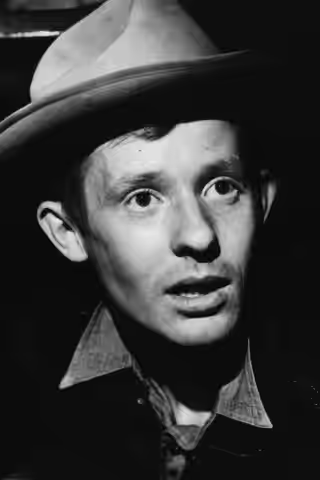
A John Ford regular who spent a long career in small parts and made a few of them stick. His Al Joad in The Grapes of Wrath (1940) is the one to see; the rest is a lesson in how a stock company works.
Fi1m perspective
In The Man Who Shot Liberty Valance (1962) there is a schoolboy licking a lollipop. He is played by a man of 51. That is O. Z. Whitehead's career in one image: a face and a body loose enough to pass for whatever age the scene needed, put to use by a director who liked to keep the same people around him. Ford used him five times, and none of the five parts is large.
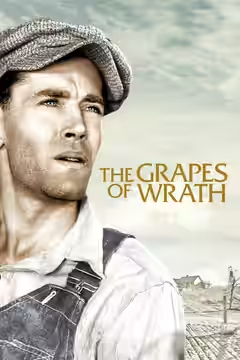
He came to films from Broadway, where he had been working since 1933, and made his screen debut in The Scoundrel (1935). By the end of the decade he was one of Ford's people, and in The Grapes of Wrath (1940) he got the best part he would have: Al Joad, Henry Fonda's younger brother. Our review of that film does not stop for him, and that is fair; it is Fonda's and Jane Darwell's picture. But watching it again we kept finding him at the edge of the frame, a young working man among people with heavier things to carry, and we liked him more than the film asked us to. What he has is timing, quiet enough that you notice the character before you notice the joke.
The rest of the Ford years are supporting turns: Norman Cass Jr. in The Last Hurrah (1958), Otis Hopkins in The Horse Soldiers (1959), the Liberty Valance schoolboy. We have not reviewed them and will not pretend to weigh them, but the pattern is plain. Ford cast him for oddness and understatement, and he kept getting cast because he delivered both without fuss. Away from Ford he did television and small film parts through the 1950s and 1960s, working mostly out of New York.
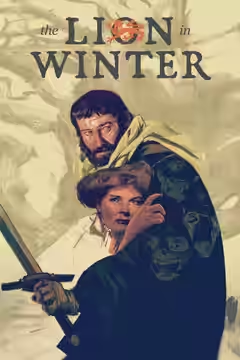
The honest caveat is that the parts stayed small. After the 1940s there were no leads, and a critic looking for a phase or a turn finds instead a man who did the same modest job well for thirty years. In 1963 he moved to Dublin and worked in Irish theatre until the late 1980s, which is where the second half of the career happened, off camera. His last screen part is from 1997; our own last sighting of him is the Bishop of Durham in The Lion in Winter (1968), a small role in a film we rate highly, and again the review does not mention him.
So: see The Grapes of Wrath for Fonda and Darwell, and while you are there, watch the brother. He will not ask for your attention. That was rather the point of him.
Biography
Oothout Zabriskie Whitehead (also credited as O. Z. Whitehead or Zebby) was an American character actor. Born in New York City on 1 March 1911, he attended Harvard University and began his career on the stage, appearing on Broadway from the early 1930s.
He made his film debut in The Scoundrel (1935) and became known for his work with director John Ford. His most recognised screen role was as Al Joad in The Grapes of Wrath (1940). He appeared in several other Ford films, including The Last Hurrah (1958), The Horse Soldiers (1959), Two Rode Together (1961) and The Man Who Shot Liberty Valance (1962), as well as television series such as Perry Mason, Gunsmoke and Alfred Hitchcock Presents.
Whitehead moved to Dublin in 1963, where he lived until his death on 29 July 1998. He also wrote biographical works on the Baháʼí Faith.