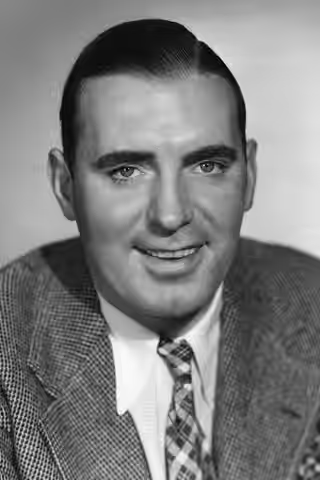
For half a century Pat O'Brien was the man standing next to the trouble: the priest, the cop, the coach, the reporter who talked faster than anyone could listen. He was at his best with James Cagney beside him, and a little thinner without.
Fi1m perspective
Watch enough Warner Bros. pictures from the 1930s and you learn what a Pat O'Brien part looks like before he opens his mouth. Somebody is about to do something rash, and O'Brien is the one beside him with his hands in his pockets, waiting to say so. A priest, a policeman, a soldier, a newspaperman; usually Irish, with a brogue produced when the script asked for it and put away when it did not. He played the good man so often that it is easy to forget he could also play the sharp one, the con artist or the wise guy who has the angle before anyone else in the scene has noticed there is one.
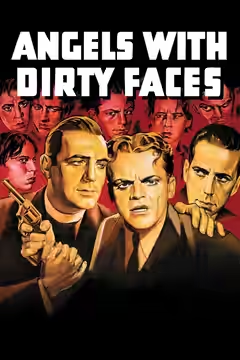
The career divides where the studio did. He came off the stage at the end of the 1920s and was a lead early: Hildy Johnson in The Front Page (1931), the reporter who cannot stop talking, was the part that first showed what he could do at speed. Warner Bros. signed him in the early 1930s and kept him working through the 1940s, and the best of that stretch is the Cagney pictures, nine of them, with O'Brien as the steady one to Cagney's live wire. Angels with Dirty Faces (1938) is the one to see: he is Father Jerry Connolly, the boyhood friend who went into the church while Cagney went the other way, and the argument between them is the film. Knute Rockne, All American (1940) gave him the title role and the locker-room speech about winning one for the Gipper, opposite Ronald Reagan.
The reservation, and it is close to the only one anyone has, is that the goodness went soft. After the Production Code arrived in 1934 the studio leaned on the decent-fellow side of him and the wise guy went into storage; Torrid Zone (1940) is where you can watch it happen. He said near the end of his life that he had had "many juicy parts and three great ones", and he was right on both counts. Most actors do not get three.
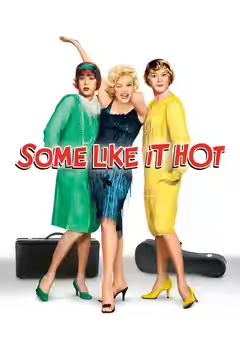
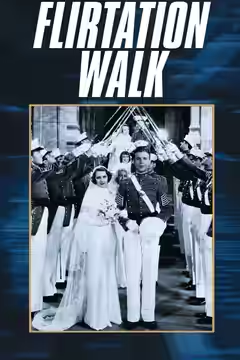
What we have reviewed is the edges of this. Flirtation Walk (1934) gives him Scrapper Thornhill in a film we found pleasant, slight and a good hour too long once it reaches West Point; it is not the film to judge him by. Some Like It Hot (1959) has him as Detective Mulligan, part of the gangster business that keeps cutting across Curtis, Lemmon and Monroe. We will admit that on our last viewing we found ourselves waiting for the gangster scenes to finish so the three leads could come back, which is unfair to O'Brien and to the plot, and true.
Start with Angels with Dirty Faces, and watch what he does while Cagney is talking. The good man is the harder part to make interesting, and for a decade he made it look like the easy one.
Biography
Pat O'Brien (born William Joseph Patrick O'Brien) was an American actor. He appeared in more than 100 films and numerous television programmes between the 1920s and the early 1980s.
He was a popular star during the 1930s and 1940s, often playing priests, policemen, reporters and military figures. Notable roles include Hildy Johnson in The Front Page (1931), Jerry Connolly in Angels with Dirty Faces (1938), the title character in Knute Rockne, All American (1940) and Detective Mulligan in Some Like It Hot (1959). He co-starred in nine films with James Cagney.
O'Brien also worked in radio and on stage, and made later television appearances including in Happy Days and WKRP in Cincinnati. He died in Santa Monica, California, in 1983.