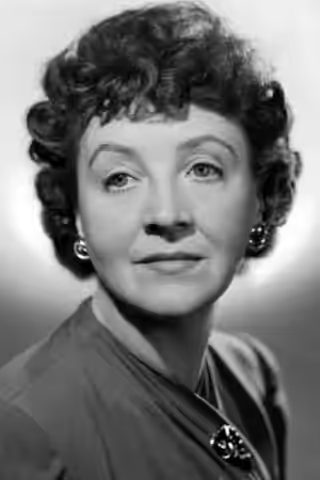
Patricia Collinge came to film late and stayed briefly, and in the handful of parts she was given she did one thing that few actors manage: she made a damaged, well-mannered woman tell the truth about her life without asking for pity.
Fi1m perspective
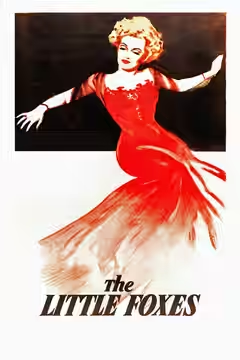
Birdie Hubbard, in The Little Foxes (1941), gets one scene we will not place or describe, in which she speaks plainly about her life, and Patricia Collinge plays it almost smiling. There is no tremble in it, no reach for the audience, and it is the one moment in William Wyler's cold, exact film that got past our guard. We had settled in to admire Bette Davis and Gregg Toland's photography, and instead we found ourselves moved by a woman in a supporting part who declines, without complaint, to ask for pity.
That was her first film, and she came to it as a stage actor of long standing. Collinge had been performing since 1904, when she appeared in London at the age of twelve, and on Broadway from 1908; she had played the title part in Pollyanna in 1916 and Birdie in the original Broadway production of Lillian Hellman's play before Wyler asked her to repeat it. The settledness our review noticed in the cast who came over from the stage is hers above all. She knew where Birdie's pauses fell because she had already found them in front of an audience.
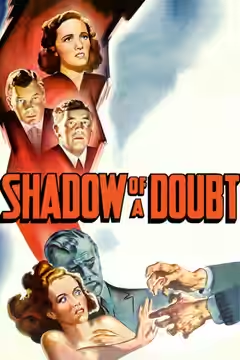
Hollywood then used her, as it used most stage women of a certain age, for the sympathetic mother and the wounded aunt. In Alfred Hitchcock's Shadow of a Doubt (1943) she is Emma Newton, the mother whose delight in her visiting brother is the thing everyone else in the house must work around. Our review found its suspense in Teresa Wright and Joseph Cotten and did not single her out, which is fair, and also rather the point: Emma's ordinary warmth is what the danger is measured against, and it only works if nobody notices it being acted. Collinge and Wright appeared together in three films, and Hitchcock came back to her repeatedly, on film and later on television in Alfred Hitchcock Presents and The Alfred Hitchcock Hour, usually as the woman who does not suspect.
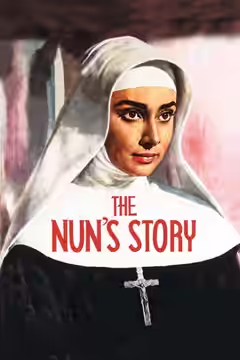
Her method, such as it was, is small things. A hand kept still, a sentence finished a beat early, a smile held a fraction too long. It reads as naturalism now and it must have read as underplaying then, next to Davis. The cost was that the film career stayed short and stayed in the supporting column. She went back to Broadway for The Heiress in 1947, made her last stage appearance in 1952, and turned up late as Sister William in Fred Zinnemann's The Nun's Story (1959), one of the few later screen parts we could send you to.
Start with Birdie. Ten minutes of The Little Foxes will tell you what Collinge could do, and Shadow of a Doubt will show you how quietly she could do it when the film needed her not to be noticed. Then reflect that most of what she did best happened on a stage, in the dark, and is gone.
Biography
Patricia Collinge was an Irish-American actress and writer. She began her stage career in London in 1904 and made her Broadway debut in 1908. She became a noted performer in plays by authors including George Bernard Shaw and Henrik Ibsen.
Her film roles included Birdie Hubbard in The Little Foxes (1941), for which she received an Academy Award nomination for Best Supporting Actress, and Emma Newton in Alfred Hitchcock's Shadow of a Doubt (1943). She also appeared in The Nun's Story (1959) and episodes of Alfred Hitchcock Presents and The Alfred Hitchcock Hour. She contributed uncredited dialogue to Shadow of a Doubt and worked on the screenplay for Hitchcock's Lifeboat (1944).
Collinge died in New York City in 1974.