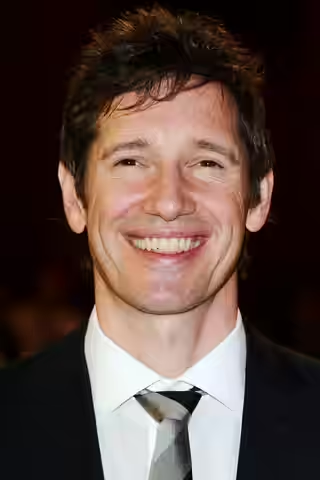
Paul W. S. Anderson writes video games into films the way a level designer would, one room at a time, with a corporation to blame at the end. The rooms are often good. The people in them are almost never worth minding.
Fi1m perspective
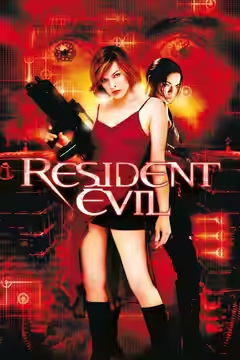
A squad goes down a corridor. Ten minutes into Resident Evil (2002) Anderson has left the game's mansion behind and put his soldiers under the ground in a laboratory called the Hive, where a computer has killed the staff to keep a virus in. Then he sends them along one passage, and it is the only sequence in the film that frightened us, because for a few minutes the place is doing the work and nobody has a rifle that matters. It is over quickly. The rest of the film is people walking down other corridors, and that is Anderson's cinema in a sentence.
He started small, with Shopping (1994), after writing for British television, and found his audience with Mortal Kombat (1995), a video game turned into a film before that was the usual thing to do. Event Horizon (1997) is the one we would send you to: a small crew in a place that has gone wrong, and a director patient enough to let the place frighten them. From 2002 he gave most of his working life to Resident Evil, writing the whole series and directing the first, fourth, fifth and sixth films, with AVP: Alien vs. Predator (2004), Death Race (2008), Pompeii (2014) and Monster Hunter (2020) in between. Milla Jovovich has led seven of his films. Jeremy Bolt, with whom he founded Impact Pictures in 1992, has produced ten. It is a steady business.
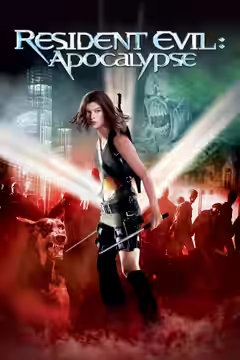
His method is to take the map and the costumes from a game and write his own people into it, and the people are where it goes wrong. In Resident Evil Bridgland's two outfits, Rain's black kit and Alice's red dress, do more to make characters than the script does. Once the dead arrive Berner cuts them fast under flat light so they come in waves, like a level, and Marco Beltrami and Marilyn Manson's score rises before every shock so that none arrives. We were bored through the middle forty minutes, and bored by something built with real skill, which is worse. In Resident Evil: Apocalypse (2004), which he wrote and handed to Alexander Witt, the problem grows with the map: a whole city, 94 minutes, and nobody in it has a relationship with anybody. Jared Harris brings more worry to a father in a wheelchair than the page gave him. Umbrella is the villain of both films, and distrust of the corporation is Anderson's steadiest idea, but a logo is not a person.
Anderson has said that he makes films for audiences, and that if their reaction is good he has done his job. Most critics have not been that audience, and we see why; we also see the people who are. Watch Event Horizon. If you want the game films, take the first, watch the corridor twice, and do not expect to remember anyone's name in the morning.
Biography
Paul W. S. Anderson is an English film director, screenwriter and producer. Born on 4 March 1965 in Wallsend, England, he graduated from the University of Warwick with a degree in film and literature. He co-founded Impact Pictures with producer Jeremy Bolt in 1992.
Anderson made his feature directorial debut with Shopping (1994), which he also wrote. He achieved commercial success with the video game adaptation Mortal Kombat (1995) and directed the science fiction film Event Horizon (1997). He is best known for his contributions to the Resident Evil series, serving as director, writer and producer on Resident Evil (2002) and Resident Evil: The Final Chapter (2016). He has also directed Alien vs. Predator (2004), Death Race (2008) and Monster Hunter (2020).
Anderson is married to actress Milla Jovovich.