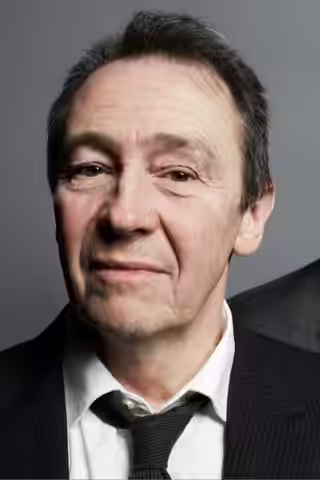
A sketch comedian who found that the quick turn, done often enough, becomes a portrait, and whose down-at-heel British types carry more sadness than the catchphrases let on. Best on television, in his own material; in other people's films he is mostly a voice.
Fi1m perspective
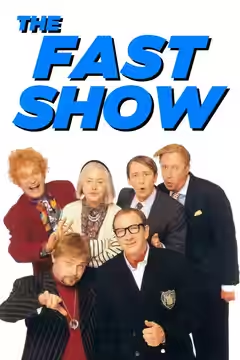
In The Fast Show (1994) a man appears, says the thing he always says, and is gone before the joke can wear thin. That is the format Paul Whitehouse built with Charlie Higson, and its speed is its mercy: nobody is asked to sustain a small play, and irritation rarely has time to settle before another face arrives. Watch a whole run, though, and the turns add up. The characters are eccentrics and down-at-heel types, and under most of them is something sad that the catchphrase is there to cover.
He came to it sideways, writing for Harry Enfield in the early 1980s after a spell as a plasterer, and the Enfield partnership ran on through Harry Enfield & Chums and Harry & Paul. The Fast Show ran from 1994 to 2000, with revivals since. Then the work got longer and quieter: Happiness (2001), which he wrote and led as a voice-over man in a mid-life crisis, and Nurse (2015). From 2018 there is Mortimer & Whitehouse: Gone Fishing, which is him and Bob Mortimer with rods and time to talk, and is the reflective side of the persona with no character to hide behind.
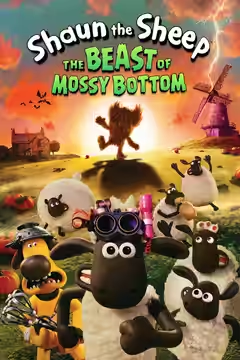
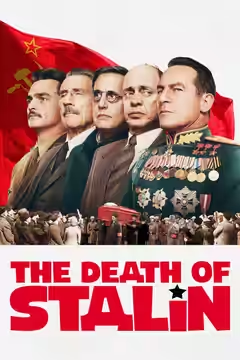
The films are supporting parts and voices, and we have said so. In Corpse Bride (2005) he and Tracey Ullman play the Van Dorts, fish merchants who want a coat of arms to go with the smell, and it is neat, small work in a film we liked more than we expected to. In The Death of Stalin (2017) he is Anastas Mikoyan in an ensemble where the clowning occasionally makes the danger harder to believe; he is not the reason to see it, and it is worth seeing. In Shaun the Sheep: The Beast of Mossy Bottom (2026) he grunts as a shopkeeper, and the casting is the whole joke.
The criticism that follows him is repetition: recognition becomes the joke, and the third pass is less funny than the first. It is fair, and it is also the price of the method. What we did not expect, going back to The Fast Show, was to be moved by it, and we were, by how much feeling the sharply played characters carry once the line is out of the way and the face is left holding it. Whitehouse knows this about himself. "I sometimes think I do a bit too much sadness. I ham it up."
Start with The Fast Show, which makes the case, then The Death of Stalin, where he is a face in a crowd and the crowd is excellent. Films will keep hiring him for the voice. The television is where he does the acting.
Biography
Paul Whitehouse is a Welsh actor, comedian, writer and presenter. He was born on 17 May 1958 in Stanleytown, Rhondda, Wales. He studied at the University of East Anglia.
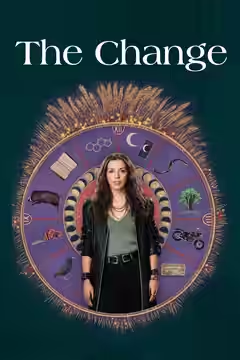
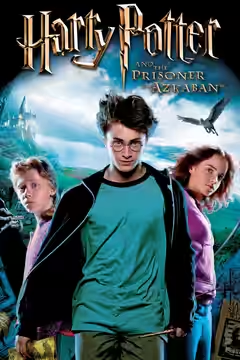
Whitehouse rose to prominence as a co-creator and performer on the BBC sketch series The Fast Show (1994–2000). He has collaborated frequently with Harry Enfield on Harry Enfield & Chums and Harry & Paul, and with Bob Mortimer on Mortimer & Whitehouse: Gone Fishing (2018–). His film roles include Sir Cadogan in Harry Potter and the Prisoner of Azkaban (2004), voices in Corpse Bride (2005) and Alice in Wonderland (2010), and Anastas Mikoyan in The Death of Stalin (2017). He played Tony in the Channel 4 series The Change (2023–2025).
Whitehouse has received five BAFTA awards for his television work.